Summer Harvest: Integrating Bold Display Typography into Creative Workflows
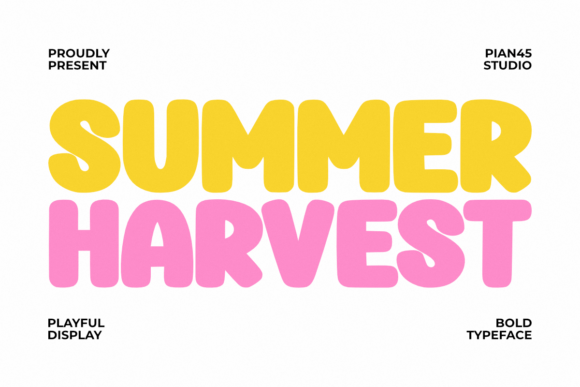
Selecting the right typeface is rarely just an aesthetic choice; it is a strategic decision that influences brand perception, user engagement, and production efficiency. Summer Harvest operates as more than a decorative element in this equation. As a vibrant and high-energy playful bold display font, it serves as a functional tool for designers, marketers, and content creators who need to communicate warmth and joy without sacrificing legibility or professional polish. Understanding where this typeface fits within a broader design system allows teams to leverage its soft, rounded edges and thick structure effectively across various media.
In practical application, Summer Harvest is best utilized as a primary headline or accent voice rather than a workhorse body text. Its heavy-weight design demands attention, making it ideal for establishing visual hierarchy in complex layouts. When integrated correctly, it bridges the gap between modern aesthetics and approachable friendliness, solving a common challenge in seasonal branding where designs often skew too juvenile or too corporate. By treating this font as a specific solution for tone-setting, professionals can streamline their creative process and ensure consistent messaging from initial concept to final production.
Strategic Planning and Pre-Design Assessment
Before opening design software, it is essential to evaluate whether Summer Harvest aligns with the project’s communication goals. This assessment phase prevents costly revisions later in the workflow. The font’s inherent characteristics—specifically its sun-kissed visual identity and organic structure—make it highly effective for specific niches while potentially clashing with others.
- Audience Alignment: Determine if the target demographic responds to soft, rounded typography. For children’s book titles, organic product packaging, and family-oriented events, this style signals safety and fun. For luxury tech or financial services, the playful nature may undermine authority.
- Seasonal vs. Evergreen Utility: While designed for summer-themed branding, assess if the typeface has longevity for your specific brand. If the project extends beyond the season, plan how Summer Harvest will transition into autumn or winter campaigns, or establish it strictly as a limited-time seasonal asset.
- Platform Requirements: Review technical specifications for intended platforms. Social media graphics require different weight considerations than printed apparel. Ensure the bold structure remains distinct when scaled down for mobile feeds or embroidered onto fabric.
This planning stage also involves auditing existing brand assets. Summer Harvest should complement, not compete with, current typographic systems. If your brand already uses a geometric sans-serif, this display font can provide necessary contrast. However, if your existing palette includes multiple decorative scripts, adding another high-energy typeface may create visual noise. Establishing these parameters early ensures the font enhances the workflow rather than complicating it.
Execution and Typographic Pairing Strategies
During the active design phase, the successful implementation of Summer Harvest relies heavily on pairing and spacing. Because it is a bold display typeface, it occupies significant visual real estate. The most efficient workflow involves selecting secondary typefaces that recede appropriately, allowing the display font to perform its function without overwhelming the layout.
Pairing this typeface requires a focus on contrast. A clean, neutral sans-serif or a structured serif often works best for body copy. The goal is to let the soft, rounded edges of Summer Harvest stand out against sharper, more utilitarian supporting text. This interaction creates a balanced rhythm that guides the viewer’s eye through the content. In social media graphics, for example, use Summer Harvest for the hook or main value proposition, while reserving lighter weights for captions, dates, and logistical details.
Kerning and leading adjustments are critical during execution. Thick, friendly structures can sometimes appear cramped at large sizes. Designers should manually adjust tracking to maintain the inviting aesthetic. Tight kerning can make rounded letters feel aggressive, while excessive spacing can disconnect the characters and reduce readability. Testing the typeface at actual output size during the drafting phase helps identify these issues before files are sent for approval or production. This attention to micro-typography ensures the final output retains the intended warmth and joy.
Technical Integration Across Media Formats
Summer Harvest transitions differently across digital and physical mediums, requiring specific technical considerations to maintain quality control. A file that looks perfect on a high-resolution monitor may fail in embroidery or low-quality print if not prepared correctly. Integrating this font into a multi-channel workflow demands format-specific preparation.
Digital and Web Implementation
For web and app interfaces, performance is key. Bold display fonts can have large file sizes. When using Summer Harvest for holiday posters or landing pages, subset the font to include only necessary characters. This reduces load times without compromising visual impact. Additionally, test rendering across browsers to ensure the soft edges do not pixelate on standard displays. CSS variables can be set up to toggle this font on and off for seasonal campaigns, streamlining future updates.
Print and Merchandise Production
The thick structure of Summer Harvest makes it excellent for vibrant apparel and packaging, but production methods dictate preparation. For screen printing, the bold weight holds ink well, but intricate internal counters may fill in on coarse fabrics. Always request a strike-off or proof. For packaging, consider how the rounded edges interact with die-cut lines. Leaving adequate bleed and safe zones prevents the friendly structure from being trimmed awkwardly. In children's books, verify that the font meets accessibility standards for young readers, ensuring sufficient contrast against colorful backgrounds.
Workflow Efficiency and Asset Management
Integrating a distinctive typeface like Summer Harvest into a team environment requires organization to prevent bottlenecks. Creative teams, freelancers, and small business owners benefit from establishing clear usage guidelines. Without documentation, inconsistent application can dilute the brand identity and lead to repetitive corrections.
- Create Usage Templates: Build master templates for recurring assets like Instagram stories, email headers, or price tags with Summer Harvest pre-styled. This locks in correct sizing, color, and pairing, reducing setup time for future projects.
- Define Hierarchy Rules: Document specifically which elements utilize this font. For instance, "Use Summer Harvest for H1 headlines under 10 words only." Clear rules prevent scope creep where the font begins appearing in subheads or call-to-action buttons inappropriately.
- Centralize Licensing and Files: Store the font files and license documentation in a shared cloud repository. Ensure all team members have access to the correct version to avoid substitution errors. Track licensing limits regarding commercial use, especially for merchandise or paid advertising.
- Establish Quality Control Checkpoints: Add a typography review step to the approval workflow. Verify that Summer Harvest is used consistently and legibly across all deliverables before launch. This catches alignment issues or pairing conflicts early.
Efficient asset management also extends to version control. If you modify the font for a specific campaign (e.g., adding texture or distress effects), save these variations as separate graphic assets rather than altering the original font file. This preserves the integrity of the base typeface for future clean applications and prevents technical errors in other documents.
Evaluating Outcomes and Long-Term Viability
Post-project analysis helps determine the return on investment for incorporating Summer Harvest. Metrics should go beyond subjective preference to measure tangible outcomes. For social media graphics, compare engagement rates on posts featuring this bold display font versus previous typographic styles. Did the warmer, more energetic aesthetic increase click-throughs or shares? For product packaging, track sales data or customer feedback regarding shelf appeal and perceived value.
Long-term viability depends on adaptability. A font that feels fresh in June may feel fatigued by August. Monitor audience sentiment and fatigue levels. Successful integration means knowing when to scale back usage or rotate to a secondary display font while keeping Summer Harvest in reserve for peak moments. This cyclical approach maintains the font’s impact and prevents it from becoming background noise.
Furthermore, gather qualitative feedback from production partners. Printers, developers, and manufacturers often provide insights on how the typeface performs technically. Their feedback can inform better preparation processes for future projects, turning initial learning curves into streamlined standard operating procedures. By treating typography as a measurable component of the business workflow, professionals can maximize the utility of expressive tools like Summer Harvest.
Practical Considerations for Diverse User Groups
Different professionals interact with this typeface through unique lenses. Educators creating classroom materials prioritize readability and emotional tone; Summer Harvest’s friendly structure supports literacy development and creates a welcoming learning environment. Marketers focus on conversion and brand recall, utilizing the font’s boldness to stop the scroll in crowded feeds. Small business owners often wear multiple hats, needing a versatile asset that works equally well on a storefront window and an invoice header.
For freelancers and agencies, presenting Summer Harvest to clients requires context. Do not show the font in isolation. Present it within mockups that demonstrate its interaction with photography, color palettes, and body copy. Clients often struggle to visualize how a "playful bold display" translates to their serious business. Showing the font applied to realistic deliverables bridges this gap and facilitates faster approvals.
Ultimately, the value of Summer Harvest lies in its ability to solve specific communication problems. It provides a shorthand for warmth, energy, and approachability that would otherwise require complex illustration or extensive copywriting. By integrating it thoughtfully into planning, execution, and management workflows, users transform a stylistic choice into a reliable operational asset. Whether designing a children’s book title or a vibrant apparel line, the focus remains on purposeful application that serves both the creator’s process and the end user’s experience.