Permeate: Channeling Raw Artistic Energy in Modern Digital Typography
In the vast landscape of digital typography, designers often face a dichotomy between precision and emotion. While clean sans-serifs and structured serifs dominate corporate communication and user interface design, there remains a persistent demand for typefaces that convey human touch, imperfection, and visceral energy. Permeate emerges as a significant solution to this creative challenge. As a brush display font characterized by bold, hand-painted textures, it serves as a bridge between traditional analog artistry and contemporary digital layout. Understanding how to leverage such a distinct typographic tool requires looking beyond its aesthetic surface to examine its functional role in visual hierarchy, brand identity, and emotional storytelling.
The Anatomy of Authentic Brush Texture
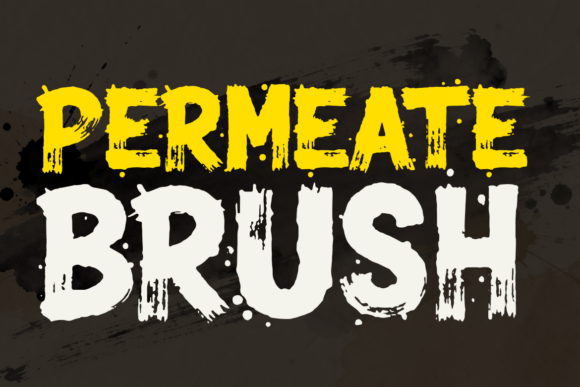
To utilize Permeate effectively, one must first understand what distinguishes it from standard script or handwritten fonts. Many digital typefaces attempt to mimic handwriting through vector smoothing, resulting in sterile curves that lack the chaotic beauty of actual ink on paper. Permeate, conversely, embraces the irregularities of physical media. The font is constructed with raw energy in mind, preserving the splatters, dry brush effects, and pressure variations inherent in manual painting.
This authenticity is not merely decorative; it is functional. In visual perception, texture acts as a tactile cue even on smooth screens. When a viewer encounters the rough edges of Permeate, their brain associates the form with craftsmanship and individual expression. This semantic association makes the typeface particularly valuable for projects where trust, creativity, or passion are primary messaging goals. Unlike geometric display fonts that suggest stability and order, the organic forms within this typeface suggest movement and freedom. Designers should treat these textural elements as active components of the composition rather than passive letterforms, allowing the negative space created by brush strokes to interact dynamically with background imagery and color fields.
Strategic Applications in Visual Media
The versatility of a display font like Permeate lies in its ability to adapt to various high-impact contexts without losing its core identity. However, because it carries such strong visual weight, its application requires strategic restraint and intentional placement. The following areas represent environments where this specific typographic style excels due to its inherent characteristics.
- Poster Design and Event Promotion: In the realm of gig posters, festival announcements, and theatrical advertising, readability at a distance is paramount. Permeate’s bold construction ensures legibility even when scaled up significantly. More importantly, the artistic expression embedded in each stroke communicates the genre and mood of an event instantly. A jazz festival poster utilizing this font conveys improvisation and soul, whereas a tech conference might require something more rigid. The font acts as a visual shorthand for the event's atmosphere.
- Album Covers and Music Packaging: Music is an auditory art form that relies heavily on visual translation for marketing. The raw energy of Permeate aligns seamlessly with genres that prioritize emotion over perfection, such as indie rock, hip-hop, folk, and experimental electronic. The hand-painted quality suggests a direct connection between the artist and the audience, reinforcing the authenticity of the musical content. On streaming platforms where album art is often viewed as a tiny thumbnail, the high contrast and distinctive silhouette of these brush letters maintain recognition.
- Creative Branding and Logotypes: For brands positioning themselves as artisanal, rebellious, or deeply personal, standard typography can feel insufficient. Permeate offers a foundation for logotypes that feel bespoke rather than manufactured. It is particularly effective for lifestyle brands, craft breweries, tattoo studios, and independent fashion labels. When used in branding, it signals that the company values human interaction and creative freedom over corporate uniformity.
- Social Media and Digital Headlines: The feed-based nature of social media demands immediate visual engagement. Quotes, announcements, and promotional graphics benefit from the kinetic motion present in this typeface. The sense of speed and gesture helps stop the scroll, drawing the eye to key messages. Because social platforms often compress image quality, the bold, textured nature of the font remains resilient against artifacting that might destroy finer details in other script styles.
Balancing Expression with Functional Hierarchy
A common pitfall when working with expressive display fonts is the temptation to overuse them. Permeate is designed to be a headline hero, not a body text workhorse. Its complex textures and variable stroke widths reduce legibility at small sizes or in long paragraphs. Therefore, successful implementation depends entirely on establishing a robust typographic hierarchy.
Designers should pair Permeate with neutral, highly legible typefaces that provide breathing room. A clean geometric sans-serif or a traditional serif creates a necessary tension, allowing the brush font to shine without overwhelming the viewer. This contrast is essential for information architecture; the brush lettering draws attention and sets the tone, while the supporting typeface delivers the detailed information. For example, on a concert poster, Permeate might render the band name and venue, while a simple sans-serif lists the date, time, and ticket price. This division of labor ensures that the artistic expression enhances rather than obstructs communication.
Furthermore, spacing plays a critical role in managing the raw energy of the font. Tight tracking can cause the textured edges to collide, creating muddy silhouettes that hinder readability. Generous tracking or optical adjustments often help maintain the integrity of individual characters, especially in all-caps settings. Conversely, in lowercase applications, the natural flow of the brush strokes may dictate tighter grouping to preserve the gestural connection between letters. Testing across multiple sizes and mediums is non-negotiable to ensure the intended emotional impact translates accurately from screen to print.
Technical Considerations for Cross-Media Implementation
While Permeate brings artistic expression to every stroke, technical execution determines whether that expression survives the production process. The hand-painted textures that define the font present unique challenges in different output environments.
In print production, the choice of paper stock dramatically alters the perception of brush typography. Uncoated, textured papers tend to absorb ink, potentially softening the crisp edges of the digital brush strokes and enhancing the analog feel. Coated stocks, conversely, preserve sharp detail but can sometimes make the texture appear artificial if not printed with high fidelity. Designers preparing files for print should consult with their printer regarding ink spread and trapping, as the intricate edges of the font may require specific prepress adjustments to prevent filling in.
For digital applications, file format and rendering optimization are equally important. When using Permeate on websites, variable font technology or careful subsetting may be necessary to manage load times, as textured fonts often contain more vector points than their geometric counterparts. Additionally, accessibility must remain a priority. While display fonts are generally exempt from strict WCAG compliance for body text, ensuring sufficient color contrast against backgrounds is vital. The irregular edges of brush letters can sometimes reduce perceived contrast, so designers should test color combinations rigorously to ensure the text remains inclusive and readable for all users.
The Psychological Impact of Hand-Painted Typography
Beyond aesthetics and technical specs, the decision to use Permeate is ultimately a psychological one. Typography is never neutral; it carries cultural and emotional baggage. In an era increasingly dominated by artificial intelligence and automated design, hand-painted typefaces represent a counter-movement toward human-centric design. They remind viewers that a person was involved in the creation process.
This "human signal" is powerful for building rapport. Research in consumer psychology suggests that imperfect, handmade visuals can increase perceptions of authenticity and care. When a business owner uses a font like Permeate for a sale announcement, it feels less like a corporate mandate and more like a personal invitation. When an educator uses it for a workshop title, it suggests an engaging, hands-on learning environment rather than a rigid lecture. The passion, power, and personality infused into the design are transferred to the subject matter itself.
However, this emotional resonance requires alignment with context. The raw energy that makes Permeate perfect for a street art exhibition would likely be inappropriate for a medical journal or a financial report. Understanding the audience is as important as understanding the font. Professionals and creators must assess whether the emotional temperature of the typeface matches the expectations and needs of their specific demographic. When aligned correctly, the font does not just display words; it amplifies the meaning behind them, transforming static text into a dynamic visual experience that resonates on a subconscious level.
Ultimately, integrating Permeate into a design workflow is an exercise in balancing control with chaos. It invites designers to relinquish some pixel-perfect precision in exchange for vitality and character. By respecting its limitations, pairing it thoughtfully, and deploying it in contexts that value artistic expression, creators can harness its raw energy to produce work that stands out in a crowded visual landscape. Whether for a global brand campaign or a personal passion project, this typeface offers a distinct voice for those willing to let their designs speak with genuine emotion.