Why Wamps Represents the Shift Toward Joyful Digital Typography
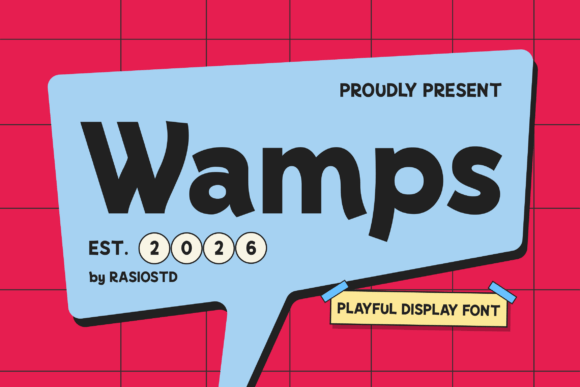
In an era where digital interfaces have become increasingly sterile and uniform, a significant counter-movement is reshaping how brands communicate. Designers and marketers are actively seeking typefaces that break the grid of corporate minimalism to forge genuine emotional connections. Enter Wamps, a bold and energetic playful display font designed to bring instant joy to your designs. This typeface is not merely a stylistic choice; it is a strategic response to a market saturated with geometric sans-serifs. Featuring chunky rounded letterforms, soft curves, and lively proportions, Wamps radiates fun, happiness, and creative confidence in a way that resonates deeply with modern audiences craving authenticity and warmth.
The relevance of Wamps extends far beyond its aesthetic appeal. It sits at the intersection of several critical industry trends: the humanization of digital experiences, the resurgence of retro-pop nostalgia, and the demand for high-impact visuals in attention-scarce environments. For professionals, creators, and entrepreneurs, understanding why this specific style of typography is gaining traction offers valuable insight into broader consumer psychology and effective visual communication strategies.
The Psychology of Softness in Modern Branding
For over a decade, the dominant trend in branding was sharp, efficient, and often cold. While functional, this approach left little room for personality. Today, we are witnessing a pivot toward "soft power" in design. Consumers, particularly younger demographics, associate rounded, organic shapes with safety, inclusivity, and optimism. Wamps capitalizes on this psychological preference through its distinct anatomy. The soft curves and chunky proportions act as visual cues that lower cognitive friction, making content feel more approachable and less demanding.
This shift is particularly evident in sectors traditionally viewed as serious or technical. EdTech platforms, wellness apps, and even fintech startups are incorporating playful display fonts like Wamps to soften their user interfaces and make complex information feel digestible. When a brand chooses a typeface with such strong personality, it signals a departure from institutional rigidity. It tells the user that the experience will be engaging rather than transactional. This is not about being childish; it is about being human. In a landscape dominated by AI-generated content and automated interactions, typography that feels handcrafted and joyful serves as a powerful differentiator.
Nostalgia as a Forward-Looking Strategy
Wamps draws clear inspiration from retro pop visuals, yet it avoids feeling dated. This balance is crucial for contemporary design. Nostalgia is currently one of the most potent tools in marketing, but successful application requires remixing the past with modern vibrancy. Pure vintage aesthetics can sometimes signal obsolescence, whereas Wamps uses retro proportions within a clean, digital-native framework. This hybrid approach appeals to multiple generations simultaneously: older audiences recognize the familiar warmth of mid-century advertising, while younger audiences appreciate the bold, meme-ready aesthetic that dominates current social media culture.
This duality makes Wamps exceptionally versatile for cross-generational campaigns. It works perfectly for children’s brands and toy packaging because it aligns with established codes of playfulness. Simultaneously, it serves adult-oriented lifestyle brands looking to inject levity into their messaging. The font acts as a bridge, leveraging the comfort of the past to build trust for future-facing products. For marketers, this means investing in assets that offer longevity rather than chasing fleeting micro-trends. The retro-modern fusion found in Wamps is part of a larger cycle of design evolution that prioritizes timelessness over novelty.
Optimizing for the Attention Economy
We cannot discuss display typography without addressing the technological realities of content consumption. Audiences scroll faster than ever, and thumbnails are smaller than ever. In this high-velocity environment, legibility and impact are paramount. Thin, intricate serifs often fail on mobile screens or get lost in busy video backgrounds. Wamps solves this functional problem through its sheer visual weight.
The bold nature of this typeface ensures that headlines remain crisp and commanding across all devices. For YouTube thumbnails and social media campaigns, where text must compete with vibrant imagery and motion, Wamps provides the necessary contrast to stop the scroll. Its lively proportions create natural focal points, guiding the viewer’s eye exactly where it needs to go. This is practical design solving a business problem. Higher click-through rates and better engagement metrics often correlate directly with how quickly a user can process the value proposition of a piece of content. By using a font that is instantly readable and emotionally evocative, creators reduce the time-to-understanding for their audience.
Practical Applications Across Verticals
While Wamps is categorized as a display font, its utility spans numerous professional verticals. Understanding where and how to deploy it effectively is key to maximizing its ROI. Here are observations on its application in current workflows:
- Digital Content Creation: For YouTubers and streamers, consistency builds recognition. Using Wamps for channel art, overlays, and merchandise creates a cohesive visual identity that stands out in algorithmic feeds. The font’s energy matches the dynamic nature of video content.
- Retail and Packaging: On physical shelves, packaging has milliseconds to make an impression. The chunky letterforms of Wamps provide excellent shelf presence for food, beverage, and lifestyle products. The rounded edges suggest tactile quality, which is essential for premium positioning in the artisanal goods sector.
- Event Marketing: Birthday invitations and festival posters require typography that sets the mood before a single word is read. Wamps communicates celebration and excitement immediately, reducing the need for excessive graphical embellishment. Letting the type do the heavy lifting results in cleaner, more sophisticated layouts.
- Editorial and Publishing: Independent publishers and zine makers are moving away from traditional typesetting for covers and pull quotes. Wamps offers a fresh alternative to standard grotesques, adding a layer of editorial voice that feels curated and intentional.
Workflow Integration and Creative Confidence
From a production standpoint, designers value versatility. A beautiful font that lacks character sets is useless in professional workflows. Wamps includes uppercase and lowercase letters, numerals, and punctuation, ensuring it can handle real-world copy without breaking the layout. This completeness is vital for freelancers and agencies working under tight deadlines. There is nothing more frustrating than falling in love with a display face only to discover it lacks the necessary glyphs for a specific headline or price point.
Furthermore, the "creative confidence" mentioned in the font's description is a tangible benefit for teams. When a typeface has such a distinct point of view, it simplifies decision-making downstream. It dictates color palettes, illustration styles, and photography direction. Instead of agonizing over whether a design feels "fun enough," the typography anchors the entire creative system. This efficiency allows teams to iterate faster and produce more consistent work. In an agile marketing environment, having a foundational asset that does so much heavy lifting is a significant operational advantage.
The Future of Expressive Typography
The rise of Wamps and similar typefaces indicates a lasting shift in our relationship with digital text. We are moving away from the idea that professionalism requires neutrality. As remote work and digital-first lifestyles continue to define our culture, the screen becomes our primary interface for human connection. Typography that mimics the cadence, warmth, and imperfection of human interaction will continue to gain prominence.
Professionals should view Wamps not just as a tool for a single project, but as a case study in responsive design thinking. It addresses the emotional needs of users, the technical constraints of platforms, and the business goals of brands simultaneously. Whether you are designing a playful logo for a startup or refreshing the visual identity of an established enterprise, integrating bold, joyful typography is a forward-looking strategy. It acknowledges that in a world of infinite content, the designs that win are those that make people feel something positive. Wamps provides the vocabulary for that expression, proving that serious design and pure joy are not mutually exclusive—they are, in fact, the perfect pair for the modern creative landscape.