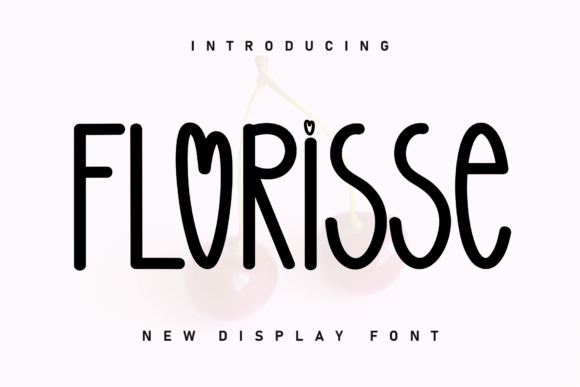
Florisse Font: Evaluating Fit for Casual Luxury Design
Selecting the right typeface is a critical decision in visual communication, as typography often conveys tone before the viewer reads a single word. Florisse is a handwritten font designed to mimic the aesthetic of marker-drawn lettering. It occupies a specific niche in the typographic landscape by combining a relaxed, sporty energy with an underlying sense of luxury and elegance. For designers, brand managers, and creatives evaluating this typeface, understanding its functional characteristics and appropriate applications is essential for determining whether it aligns with project goals.
Defining the Visual Characteristics of Florisse
Florisse distinguishes itself through a deliberate balance between informality and refinement. Unlike traditional calligraphy fonts that rely on thin nibs and high-contrast strokes, Florisse utilizes a consistent stroke width reminiscent of modern markers. This construction gives the letterforms a solid, confident presence rather than a delicate or fragile appearance. The baseline rhythm is intentionally varied, creating a dynamic flow that feels organic and human-made without appearing messy or illegible.
The "sporty" descriptor associated with Florisse refers to its forward momentum and open counters. These features prevent the font from feeling static or overly formal. Simultaneously, the elegant curves and balanced proportions allow it to function in luxurious contexts where standard casual scripts might fail. This duality makes Florisse a hybrid tool, capable of bridging the gap between streetwear aesthetics and high-end bridal stationery. When evaluating this font, it is helpful to view it not merely as a decorative element, but as a tonal anchor that sets a specific mood of accessible sophistication.
Strategic Applications and Use Cases
Evaluating Florisse requires matching its inherent traits to specific design objectives. The typeface performs exceptionally well in scenarios where the goal is to soften a brand’s image while maintaining credibility. Key applications include:
- Branding and Logos: For lifestyle brands, boutique fashion labels, or artisanal products, Florisse provides a signature look that suggests authenticity. The marker-style weight ensures legibility at various sizes, which is crucial for logo versatility across digital and print media.
- Wedding and Event Stationery: Modern weddings often seek to avoid stiff formality in favor of personalized warmth. Florisse offers the romance expected in wedding supplies but introduces a contemporary, relaxed edge that appeals to younger demographics or non-traditional celebrations.
- Fashion Lookbooks and Editorial: In fashion marketing, typography must complement photography without competing with it. The sporty yet elegant nature of Florisse pairs effectively with minimalist layouts, adding texture to clean designs without overwhelming the visual hierarchy.
- Greeting Cards and Personal Correspondence: The handwritten simulation creates an immediate emotional connection. For commercial greeting cards or premium packaging inserts, this font mimics personal touch at scale, enhancing perceived value through tactile visual cues.
Benefits and Practical Advantages
The primary benefit of selecting Florisse lies in its ability to convey multiple attributes simultaneously. Designers often struggle to find typefaces that are both casual and upscale; typically, one must choose between playful informality and rigid elegance. Florisse resolves this tension, reducing the need to pair multiple display fonts to achieve a complex tone. Additionally, the marker-based construction tends to reproduce well in various printing techniques. Because the strokes are generally uniform and substantial, the font maintains integrity in embroidery, vinyl cutting, and foil stamping, processes where fine-line scripts frequently encounter production issues.
From a user experience perspective, Florisse remains highly readable compared to many ornate script alternatives. Legibility is a significant factor in marketing promotions and social media graphics where quick comprehension is necessary. The open forms and distinct character shapes ensure that the message remains clear even when the font is used for shorter headlines or subheaders, expanding its utility beyond mere decorative accents.
Tradeoffs and Limitations
Despite its versatility, Florisse is not a universal solution. Understanding its limitations is as important as recognizing its strengths. The most significant tradeoff is its unsuitability for extended body text. As a display typeface with handwritten characteristics, Florisse lacks the optimized spacing and x-height consistency required for comfortable reading in paragraphs. Using it for anything longer than a few words will likely result in visual fatigue and reduced accessibility.
Furthermore, the distinct personality of Florisse can be polarizing in certain corporate or institutional contexts. Industries requiring strict adherence to tradition, such as law, finance, or heavy manufacturing, may find the sporty, marker-drawn aesthetic too informal or youthful. In these sectors, the font could inadvertently signal a lack of seriousness or stability. Additionally, because Florisse has a strong stylistic identity, it demands careful pairing. Combining it with other highly stylized display fonts can create visual clutter. It generally requires neutral, structured sans-serif or serif companions to ground the composition.
Evaluating Alternatives and Decision Criteria
When deciding whether to implement Florisse, designers should conduct a comparative evaluation against project requirements. If the objective is pure, traditional luxury with historical references, a copperplate or didone script may be more appropriate. Florisse leans toward modern luxury, which implies approachability over exclusivity. Conversely, if the goal is aggressive athleticism or technical performance, a bold geometric sans-serif or specialized athletic display font would communicate those values more directly than Florisse’s softer interpretation of sportiness.
Consider the medium and reproduction method as decisive factors. If the design will primarily exist on low-resolution screens or be printed at very small sizes, test Florisse rigorously. While robust, the handwritten nuances can sometimes lose definition at extreme scales. Compare it against simpler brush scripts or monoline hand-lettered fonts to see if the specific marker texture adds value or unnecessary complexity.
Finally, assess the longevity of the choice. Handwritten trends cycle frequently. Florisse’s blend of casual and elegant elements gives it a degree of timelessness compared to hyper-trendy novelty scripts, but it still carries a contemporary marker aesthetic. For projects intended to last decades without refreshment, consider whether this specific style aligns with long-term brand equity. For campaigns, seasonal collections, or brands that embrace evolution, Florisse offers a distinctive, practical solution that balances artistic expression with commercial functionality. By weighing these aesthetic, technical, and strategic factors, creatives can determine if Florisse is the precise instrument needed for their specific design challenge.