Evaluating Pamore Font for Luxury and Editorial Design
Selecting the appropriate typeface is one of the most critical decisions in visual communication, particularly when the objective is to convey sophistication or high value. Pamore is a modern ligature sans serif font that has emerged as a specific solution for designers seeking to balance contemporary minimalism with traditional elegance. Unlike standard geometric sans serifs that prioritize utility and neutrality, Pamore incorporates refined curves and luxurious ligatures to create a distinct aesthetic personality. For professionals evaluating typography for branding, editorial layouts, or high-end packaging, understanding the functional applications and limitations of this typeface is essential for making an informed selection.
Defining the Typographic Character of Pamore
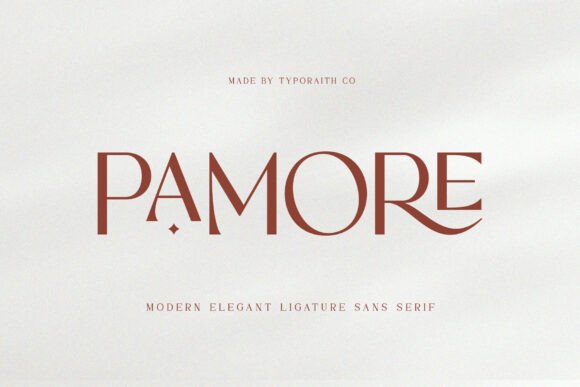
Pamore distinguishes itself within the sans serif category through its deliberate integration of calligraphic influences into a modern framework. While it retains the clean vertical stress associated with contemporary sans serifs, the letterforms feature softened terminals and fluid connections that mimic hand-lettering. This hybrid approach addresses a common challenge in luxury design: how to maintain modern readability while avoiding the sterility often associated with minimalist typography.
The defining feature of this typeface is its extensive set of ligatures. These are not merely decorative alternates but are designed to improve the rhythmic flow of text. In display settings, these ligatures reduce visual friction between specific character pairs, creating a seamless wordmark that feels custom-drawn rather than typed. The overall proportion of the font leans toward a higher x-height with moderate contrast, ensuring that the elegance does not compromise legibility at medium sizes. This makes Pamore functionally different from pure script fonts or high-contrast didones, positioning it as a versatile middle ground for projects requiring both style and substance.
Primary Use Cases and Strategic Fit
Evaluating whether Pamore aligns with a project requires analyzing the specific emotional response the design must elicit. This typeface performs optimally in contexts where perceived value and attention to detail are paramount.
- Luxury Branding and Identity: For fashion labels, jewelry brands, or boutique hospitality, Pamore provides an immediate signal of exclusivity. The ligatures allow for unique logotypes without the expense of custom lettering, while the sans serif base ensures the brand remains accessible to modern audiences.
- Editorial and Magazine Titles: In publication design, headlines must arrest attention without overwhelming the accompanying imagery. Pamore’s sleek letterforms offer enough visual weight to serve as mastheads or section headers while maintaining the negative space necessary for sophisticated layout grids.
- Wedding and Event Stationery: Traditional scripts can sometimes feel dated or overly formal. Pamore offers a contemporary alternative for invitations and place cards, providing the romance expected in wedding stationery with a cleaner, more current silhouette.
- Premium Packaging: On product labels and boxes, typography must remain legible at small scales while conveying quality. The refined curves of Pamore translate well to print finishes like embossing or foil stamping, enhancing the tactile experience of the packaging.
Benefits and Functional Advantages
The decision to adopt Pamore often stems from its ability to solve specific aesthetic problems. Its primary benefit is the elevation of perceived quality through typographic nuance. In markets saturated with generic geometric sans serifs, the subtle detailing in Pamore helps a brand differentiate itself without resorting to loud or chaotic visuals. The font achieves a sense of timelessness by avoiding extreme trends; it is neither aggressively futuristic nor strictly复古, allowing designs to age gracefully.
From a production standpoint, the inclusion of pre-designed ligatures streamlines the workflow for logo creation and headline setting. Designers can achieve a polished, bespoke look directly within their layout software, reducing the time spent manually adjusting kerning or drawing vector connections. Furthermore, the balance between minimalism and ornamentation means the font can carry significant visual interest on its own, potentially reducing the need for additional graphic elements or complex illustrations in a layout.
Tradeoffs and Practical Considerations
Despite its strengths, Pamore is not a universal solution. Objective evaluation requires acknowledging scenarios where this typeface may introduce friction or fail to meet technical requirements.
Legibility Constraints
The very features that make Pamore elegant—ligatures and refined curves—can become liabilities at small sizes. In body copy, footnotes, or mobile interface elements, the intricate details may blur or reduce reading speed. This typeface is primarily a display tool. Projects requiring extensive paragraphs of text will likely need to pair Pamore with a highly legible, neutral sans serif or serif for body content. Relying on Pamore alone for an entire publication or website is generally inadvisable due to these readability concerns.
Tone Specificity
Pamore carries a strong inherent voice. It communicates softness, luxury, and femininity. If a project aims to convey industrial strength, technological innovation, corporate stability, or utilitarian function, this typeface may send conflicting signals. A tech startup focusing on cybersecurity or a heavy machinery manufacturer would likely find the delicate curves of Pamore misaligned with their brand attributes. In such cases, the font’s elegance becomes a distraction rather than an asset.
Licensing and Technical Compatibility
As with any specialized display font, users must verify licensing terms for intended use cases, particularly for web embedding or commercial merchandise. Additionally, designers should test the OpenType ligature features across all target platforms and browsers before finalizing a digital project. While most modern environments support these features, fallback behaviors vary, and a broken ligature can disrupt the intended aesthetic in responsive web designs.
When to Consider Alternatives
Comparative analysis is vital for sound typographic selection. There are distinct situations where alternatives may outperform Pamore:
- High-Density Information: If the project involves data visualization, technical manuals, or dense UI design, a functional grotesque or neo-grotesque typeface with open counters and uniform stroke width is superior. Clarity must take precedence over style in these contexts.
- Traditional Heritage: For brands emphasizing centuries-old history or classical tradition, a true serif or blackletter typeface may communicate authenticity more effectively than a modern ligature sans serif. Pamore reads as "modern luxury" rather than "historical heritage."
- Budget-Constrained Web Projects: If web performance is the primary metric and loading additional font files is prohibitive, system-safe alternatives or variable fonts optimized for screen rendering may be more practical choices.
Making the Final Selection Decision
Determining whether Pamore is the correct choice involves testing it against the specific deliverables of the project. Designers should mock up actual headlines, logos, and packaging concepts rather than relying solely on specimen sheets. Evaluate how the ligatures interact with the specific brand name or key messaging; some letter combinations work better than others, and the specific wording of a project dictates the success of a ligature-heavy font.
Consider the longevity of the project. If the design needs to remain relevant for five to ten years, Pamore’s balanced aesthetic offers reasonable staying power. However, if the goal is to capitalize on a fleeting micro-trend, the investment in a distinctive typeface may yield diminishing returns. Ultimately, Pamore serves best as a strategic accent—a tool for highlighting premium touchpoints within a broader, more functional typographic system. By viewing it as a specialized instrument for elevation rather than a general-purpose workhorse, designers can leverage its sophistication effectively while maintaining overall usability and clarity in their communications.