Bigose Font: Evaluating Fit for Bold Branding and Packaging Design
Selecting the right typeface is a critical decision in visual identity, particularly for brands operating in competitive retail environments. Bigose is a display font designed specifically to address the need for strong visual impact through bold geometry and energetic letterforms. When evaluating typography for beverage packaging, food branding, or promotional posters, designers must balance aesthetic appeal with functional readability. This assessment explores the technical specifications, practical applications, and strategic considerations of Bigose to help creative professionals determine if it aligns with their specific project requirements.
Defining the Visual Character of Bigose
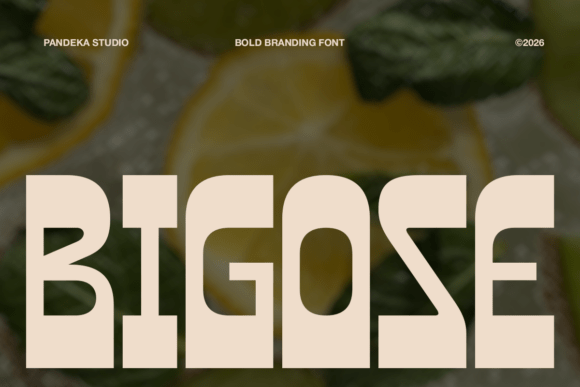
Bigose is categorized as a bold, modern display typeface characterized by chunky proportions and clean geometric construction. Unlike serif fonts that convey tradition or humanist sans-serifs that suggest neutrality, Bigose utilizes friendly curves and substantial weight to project confidence and vibrancy. The design philosophy centers on immediate legibility at a distance, making it inherently suited for environments where quick visual processing is essential.
The font family includes three distinct styles: Regular, Outline, and Shadow. This built-in variation allows designers to create layered typographic compositions without relying on external effects or multiple font families. Additionally, the inclusion of three alternate characters provides flexibility in letter combinations, enabling subtle customization within logotypes or headlines. Crucially, Bigose features PUA (Private Use Area) encoding, ensuring that special characters and decorative elements are accessible across various design software without requiring complex workarounds or additional plugins.
Strategic Applications and Ideal Use Cases
Evaluating whether Bigose is appropriate for a project requires understanding its optimal performance contexts. The typeface excels in scenarios demanding high visibility and a contemporary tone.
- Beverage and Food Packaging: The chunky letterforms maintain integrity when printed on curved surfaces like bottles and cans. The bold weight ensures product names remain readable against busy background patterns or nutritional information.
- Retail Signage and Point of Sale: In physical retail spaces, Bigose’s geometric clarity supports rapid recognition. The Shadow and Outline variants can be utilized to create hierarchy on shelf talkers or window decals without introducing new typefaces.
- Digital Marketing Assets: For social media graphics and web banners, the font’s strong personality translates well to small screens. The high contrast between the letterforms and negative space aids accessibility and user engagement in fast-scrolling feeds.
- Event and Promotional Posters: The energetic tone makes it suitable for festivals, sales events, and lifestyle branding where a playful yet confident voice is required.
Benefits and Functional Advantages
Beyond aesthetics, Bigose offers several practical benefits that streamline the design workflow and enhance brand consistency. The integrated style set (Regular, Outline, Shadow) reduces the need for manual styling, which can often result in distorted letterforms or inconsistent stroke widths. By using native font variations, designers ensure that the geometry remains mathematically precise across all applications.
The PUA encoding is a significant technical advantage for cross-platform compatibility. Designers working in Cricut Design Space, Silhouette Studio, or older versions of Adobe Illustrator can access alternates and ligatures directly from the character map. This eliminates friction during production and ensures that the intended design translates accurately from screen to print or cut vinyl.
Furthermore, the friendly curves prevent the bold weight from appearing aggressive or overly industrial. This nuance allows brands in the food and beverage sector to communicate strength and quality while maintaining an approachable, consumer-friendly demeanor. The alternates provide just enough variation to avoid the repetitive rhythm that can sometimes plague geometric display fonts, adding a layer of bespoke craftsmanship to standardized layouts.
Tradeoffs and Limitations to Consider
While Bigose is highly effective for specific applications, it is not a universal solution. Understanding its limitations is as important as recognizing its strengths.
Unsuitability for Body Text: Bigose is strictly a display typeface. Its heavy weight and condensed geometry reduce readability at small sizes or in long-form paragraphs. Projects requiring extensive copy, such as annual reports, legal disclaimers, or article content, will necessitate pairing Bigose with a highly legible sans-serif or serif text font.
Tone Specificity: The font’s bold and playful personality may clash with brands aiming for luxury, minimalism, or corporate conservatism. High-end fashion, financial services, or medical institutions typically require typography that conveys restraint and precision rather than energy and volume. Using Bigose in these contexts could undermine the desired brand perception.
Space Requirements: Chunky display fonts consume significant horizontal space. In layouts with strict dimensional constraints, such as narrow mobile banners or compact product labels, Bigose may force awkward line breaks or excessive scaling. Designers must test the font early in the layout process to ensure it fits within the designated real estate without compromising legibility.
Comparative Evaluation and Alternatives
When deciding whether to implement Bigose, it is helpful to compare it against other categories of display typography. If a project requires boldness but needs a more retro or vintage aesthetic, a slab serif or textured brush script might be more appropriate. Bigose’s clean geometry places it firmly in the modern/contemporary category; it lacks the distressed edges or historical references of retro revival fonts.
For brands seeking similar impact but with greater versatility across weights, a variable font family with optical sizing might offer more flexibility. However, variable fonts often lack the specific stylistic alternates and pre-built shadow/outline layers that Bigose provides out of the box. If the priority is speed and self-contained styling for packaging, Bigose offers a more turnkey solution than building custom effects with a standard geometric sans-serif.
Designers should also consider licensing and technical support. While Bigose includes PUA encoding for broad compatibility, teams working exclusively in advanced typography software (like Glyphs or FontLab) may prefer fonts with OpenType feature integration for more automated contextual alternates. Evaluating the team’s technical workflow alongside the creative brief ensures the selected tool enhances rather than hinders production.
Making the Final Selection Decision
Ultimately, the decision to use Bigose should be driven by the intersection of brand personality, medium, and audience expectation. It is a strong candidate when the goal is to capture attention quickly in saturated markets, convey modern energy, and utilize layered typography without complex manual manipulation.
Before finalizing the selection, conduct practical testing: set sample headlines at actual print or pixel size, test the alternates in context to ensure they improve rather than disrupt flow, and verify PUA accessibility in your primary design software. Pair it with a neutral text face to confirm hierarchy works effectively. If Bigose delivers the required readability and tonal alignment during these tests, it serves as a reliable foundation for bold, impactful visual communication. If the tests reveal issues with space, tone mismatch, or legibility, exploring alternative geometric displays or modular type systems would be the prudent next step.