Evaluating Stardust Symphony for Celestial Design Projects
Selecting the appropriate typeface is a critical step in establishing visual identity, particularly for projects rooted in mysticism, astronomy, or fantasy. Stardust Symphony presents itself as a specialized display font that integrates celestial motifs directly into the letterforms. Unlike standard serif or sans-serif families where decorative elements are added as separate graphics, this typeface embeds moon phases, star clusters, and cosmic dust trails within the character skeleton itself. For designers and brand strategists evaluating this option, understanding its specific utility, technical limitations, and ideal application contexts is essential for making an informed decision.
Defining the Typographic Character
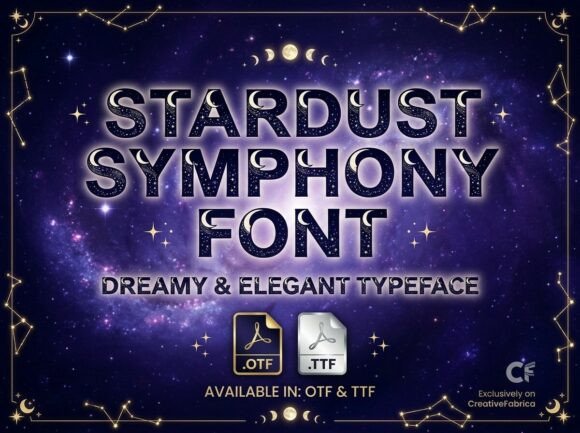
Stardust Symphony is classified as a magical display font with a dreamy and elegant aesthetic. Its primary distinction lies in the fusion of structural integrity with ornamental detail. While many novelty fonts sacrifice readability for artistic expression, Stardust Symphony is built on a bold, sturdy skeleton. This foundational weight ensures that the characters remain distinct even when the integrated celestial details are present. The design aims to balance high legibility with an ethereal atmosphere, positioning it as a functional tool for communication rather than purely decorative art.
The visual language of the font communicates intuition and timelessness. Each glyph acts as a thematic anchor, reducing the need for supplementary iconography. When evaluating this typeface, it is important to recognize that it functions best as a headline or title element. The density of detail within each character means it carries significant visual weight, making it a dominant feature in any layout.
Strategic Applications and Ideal Use Cases
Determining whether Stardust Symphony aligns with project goals requires analyzing the target audience and medium. The font excels in niches where emotional resonance and thematic consistency are prioritized over rapid information processing. Based on its design characteristics, it is particularly effective in the following scenarios:
- Astrology and Tarot Branding: The integrated moon phases and star clusters provide immediate semiotic recognition for spiritual and esoteric brands. This reduces cognitive load for the viewer, as the typography itself reinforces the service offering.
- Mystical Jewelry Logos: Luxury and artisanal jewelry brands often require a sense of elegance and mystery. The sturdy skeleton of Stardust Symphony supports the premium feel required for logos, while the celestial details suggest craftsmanship and enchantment.
- Children’s Storybook Titles: For fantasy and bedtime stories, the font establishes a narrative tone before the reader engages with the body text. The "dreamy" quality appeals to younger demographics and parents seeking whimsical content.
- Dream-Themed Event Stationery: Wedding invitations, gala programs, and festival posters benefit from the font's atmospheric qualities. It sets expectations for an immersive experience through typographic choice alone.
Benefits of Integrated Celestial Motifs
The primary advantage of choosing Stardust Symphony over a standard font paired with clip art is cohesion. When designers attempt to recreate a similar look manually, there is often a disconnect between the stroke width of the text and the line weight of the illustrations. Because the celestial elements in Stardust Symphony are part of the vector construction, they share the same optical weight and style as the letterforms. This results in a more professional and polished appearance.
Additionally, the bold skeleton addresses a common failure point in thematic typography. Many "magical" fonts are overly thin or spindly, causing them to disappear against busy backgrounds or fail in print production. The sturdiness of this typeface allows for greater versatility across different media, from digital screens to textured paper stocks. It maintains its presence without requiring excessive tracking or artificial bolding, which can distort delicate details.
Tradeoffs and Practical Considerations
While Stardust Symphony offers distinct aesthetic benefits, it also presents specific tradeoffs that must be weighed during the selection process. Understanding these limitations prevents misuse and ensures the final design remains effective.
Legibility at Small Sizes
The intricate details that define the font’s character become liabilities at small point sizes. Star clusters and dust trails may fill in or pixelate when scaled down for captions, footnotes, or mobile interface elements. Evaluators should test the font at the smallest intended size before licensing. If the project requires extensive body copy or fine print, this typeface is likely unsuitable as a primary text driver.
Visual Density and Whitespace
Because every character contains internal detail, the overall texture of a block of text set in Stardust Symphony is dense. This necessitates generous whitespace and careful pairing with minimalist supporting elements. Using this font in a cluttered layout can result in visual noise that overwhelms the viewer. Designers must be prepared to let the typography breathe, which may impact layout efficiency in space-constrained formats like packaging labels or social media thumbnails.
Tone Specificity
The font has a strong personality. While this is beneficial for niche branding, it limits cross-category flexibility. A corporate report, tech startup, or medical facility would likely find the tone incongruent with their messaging. Evaluators looking for a versatile workhorse font for a diverse brand portfolio may find Stardust Symphony too specialized.
When to Consider Alternatives
Objective evaluation involves recognizing when a different solution better serves the user's needs. Alternatives to Stardust Symphony should be considered in the following situations:
- High-Volume Text Requirements: If the project involves paragraphs of reading material, opt for a clean serif or sans-serif for body copy and reserve Stardust Symphony strictly for headers. Alternatively, select a simpler display font with fewer internal distractions if the header needs to be longer.
- Modern or Minimalist Aesthetics: For brands that want a subtle nod to the cosmos without overt illustration, a high-contrast Didone or a geometric sans-serif may convey elegance without the literal interpretation of stars and moons.
- Technical Constraints: In environments with strict file size limits or low-resolution rendering (such as certain e-readers or legacy web platforms), the complex vectors of this font may cause performance issues or rendering artifacts. Standard web-safe fonts or optimized variable fonts are safer choices in these technical contexts.
- Budgetary Restrictions: Specialized display fonts often carry different licensing terms than comprehensive super-families. If the budget allows for only one typeface purchase for an entire brand identity, a versatile serif family with multiple weights may offer better long-term value than a single-purpose display face.
Making the Final Decision
The decision to implement Stardust Symphony should be driven by alignment between the font’s inherent qualities and the project’s communication goals. It is a strong candidate when the objective is to evoke wonder, establish a mystical atmosphere, or signal membership in a specific cultural niche like astrology or fantasy literature. Its sturdy construction makes it a viable option for commercial branding where durability and legibility are as important as aesthetics.
However, successful implementation requires restraint. Evaluators should view this typeface as a spotlight rather than ambient lighting. By limiting its use to high-impact moments and pairing it with neutral, highly legible companions, designers can leverage the celestial charm of Stardust Symphony without compromising functional clarity. Ultimately, the font is a tool for storytelling; its value is realized only when the story being told matches the voice in which it is written.