Evaluating Ornament Handwriting for Authentic Design Projects
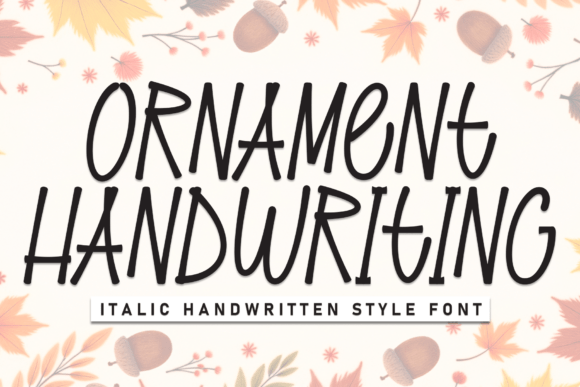
Selecting the right typeface is a critical decision in visual communication, particularly when the goal is to convey sincerity and human connection. Ornament Handwriting is an organic display font designed to bridge the gap between personal journaling and professional artisanal branding. Unlike digital scripts that simulate handwriting through perfect repetition, this typeface captures a sincere-and-spontaneous soul through tall, hand-drawn letterforms and a rhythmic, forward-leaning italic slant. For designers, crafters, and brand strategists evaluating typography options, understanding the specific characteristics, appropriate use cases, and limitations of Ornament Handwriting is essential for making an informed selection.
Defining the Aesthetic Characteristics
To determine if Ornament Handwriting aligns with a project’s visual identity, one must first understand its distinct structural qualities. The font is categorized as an organic display typeface, meaning it is intended for headlines, logos, and short-form text rather than extended reading. Its primary differentiator is the authentic pen-to-paper feel achieved through casual line variations. These imperfections are intentional, providing a texture that standard vector fonts often lack.
The letterforms are notably tall and feature a consistent forward lean. This italic slant creates a sense of movement and urgency, mimicking the natural flow of rapid handwriting. However, unlike traditional calligraphy which can sometimes appear formal or rigid, Ornament Handwriting maintains an approachable personality. The strokes vary in weight and curvature, suggesting a spontaneous creation process. When evaluating this font, consider whether your design requires this specific blend of rhythmic energy and unpolished warmth. It is distinct from both clean sans-serif scripts and ornate Victorian lettering, occupying a niche best described as modern rustic authenticity.
Ideal Applications and Strategic Fit
Ornament Handwriting performs optimally in contexts where emotional resonance and individuality are paramount. Evaluating its fit requires matching these strengths to specific project goals.
- Independent Handmade Craft Identities: For makers selling pottery, textiles, or woodwork, the font reinforces the value of manual labor. The irregularities in the typeface mirror the unique variations found in handmade goods, creating visual cohesion between the product and the packaging.
- Boutique Greeting Card Designs: In the stationery market, consumers often seek alternatives to mass-produced prints. This typeface offers the intimacy of a handwritten note while maintaining the legibility required for commercial printing. Its tall aspect ratio allows for impactful vertical layouts on card covers.
- Rustic Wedding Stationery: Modern wedding aesthetics frequently balance elegance with relaxed informality. Ornament Handwriting serves as an effective choice for invitation headers, seating charts, and welcome signs where a personal touch is desired without sacrificing readability.
- Social Media Headers and Overlays: Digital platforms benefit from high-contrast typography that stops the scroll. The forward-leaning slant and organic texture remain legible even when scaled down for mobile screens, making it suitable for poetic quotes, announcement overlays, and profile banners.
Benefits and Practical Advantages
The primary benefit of selecting Ornament Handwriting is the immediate establishment of tone. In an era of minimalist corporate branding, this font signals vulnerability and craftsmanship. It reduces the cognitive distance between the brand and the audience by simulating human presence. From a practical design standpoint, the tall x-height improves visibility compared to many other script fonts, which often suffer from small counters and tight spacing. The rhythmic consistency also makes it easier to pair with secondary typefaces; because the slant is steady rather than erratic, it anchors well against simple serifs or geometric sans-serifs.
Furthermore, the font addresses a common pain point in artisanal marketing: the difficulty of scaling personal branding. While actual handwriting cannot be easily standardized across websites, business cards, and signage, Ornament Handwriting provides a reproducible asset that retains the original creator's voice. This consistency is vital for building long-term brand recognition without resorting to sterile corporate typography.
Tradeoffs and Design Considerations
Despite its strengths, Ornament Handwriting presents specific limitations that must be weighed during the evaluation process. As a display font, it is strictly unsuitable for body copy. Using it for paragraphs, fine print, or instructional text will result in poor readability and user fatigue. The very line variations that provide charm at large sizes become visual noise at small sizes.
Designers should also consider the intensity of the personality. Because the font is so expressive, it dominates the visual hierarchy. It leaves little room for other decorative elements. If a design already features complex illustrations, textured backgrounds, or multiple colors, adding this typeface may create visual clutter. Additionally, the forward-leaning slant requires careful attention to alignment. Center-aligning italicized, hand-drawn text can sometimes look unbalanced; left-alignment or optical adjustment is often necessary to maintain stability.
Another consideration is tonal mismatch. While excellent for rustic or personal brands, this font may undermine authority in sectors requiring precision, such as legal services, medical technology, or financial institutions. The "spontaneous soul" that defines the font can inadvertently signal a lack of rigorous professionalism in the wrong context.
When to Consider Alternatives
Evaluation involves knowing when not to use a tool. Alternatives to Ornament Handwriting should be considered in the following scenarios:
- High-Density Information: If the project involves menus, technical specifications, or lengthy storytelling, opt for a legible serif or sans-serif. Reserve Ornament Handwriting solely for section breaks or titles.
- Luxury and Formal Elegance: For high-end fashion or black-tie events, the casual nature of this font may appear too informal. Traditional copperplate scripts or high-contrast serifs typically convey luxury more effectively.
- Corporate Neutrality: Brands aiming for broad, non-specific appeal may find the font too idiosyncratic. Neutral grotesques or humanist sans-serifs offer warmth without the strong stylistic commitment.
- Small-Scale Print: For business cards with dense contact information or product labels with regulatory text, the intricate details of the letterforms will likely degrade during printing.
Making the Final Decision
Determining whether Ornament Handwriting is the correct choice requires testing within the actual design environment. Evaluate the font not in isolation, but alongside your color palette, imagery, and layout grid. Assess whether the forward-leaning slant complements or conflicts with existing visual vectors. Test legibility at the smallest size you intend to use; if the character distinction blurs, the application is inappropriate regardless of aesthetic preference.
Ultimately, Ornament Handwriting is a specialized tool for infusing designs with personal warmth. It excels when the objective is to humanize a brand, celebrate craftsmanship, or evoke the intimacy of correspondence. By objectively weighing its organic charm against functional constraints and tonal requirements, designers can confidently decide if this typeface supports their strategic goals. When aligned correctly, it transforms standard typography into a genuine extension of the maker’s hand, fostering deeper connections with audiences who value authenticity over perfection.