Franz: Engineering Visual Impact Through Industrial Precision
In the vast landscape of digital and print typography, certain typefaces are designed to whisper, while others are engineered to command. Franz belongs unequivocally to the latter category. It is not merely a collection of letterforms; it is a structural system built for maximum impact and modern durability. For designers, brand managers, and content creators navigating an increasingly saturated visual environment, understanding the utility of such a specialized tool is essential. Franz represents a specific intersection of aesthetics and function, offering a solution for projects that demand unyielding strength and brilliant structural precision.
This article explores the practical application of Franz, moving beyond simple description to examine how its industrial characteristics solve real-world design problems. Whether you are developing automotive branding, creating high-performance tech interfaces, or designing military-inspired editorial layouts, understanding the mechanics of this stencil font will help you determine if it is the right instrument for your next project.
The Anatomy of Structural Power
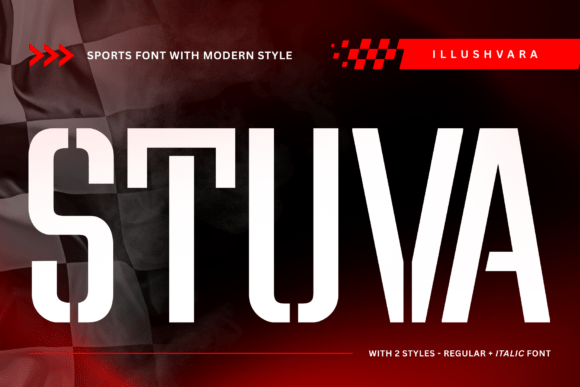
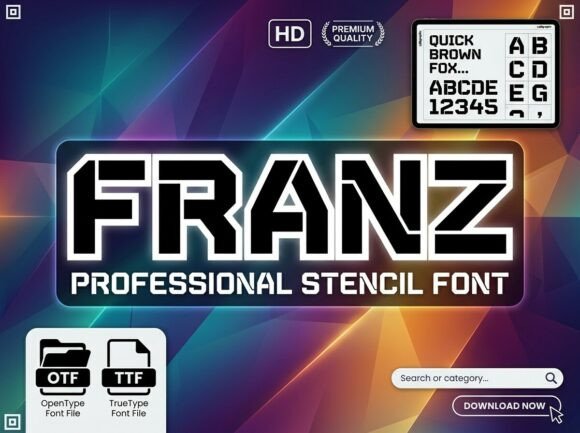
To use Franz effectively, one must first understand what distinguishes it from standard geometric sans-serifs. The typeface is defined by massive, geometric letterforms that prioritize legibility at scale. However, its defining characteristic is the presence of sharp, technical notches. These are not decorative flourishes; they are functional remnants of stencil manufacturing processes that have been refined into a deliberate aesthetic choice.
These notches serve two primary purposes in a modern design context:
- Visual Rhythm: In heavy-weight fonts, solid blocks of ink can create visual fatigue or appear muddy at smaller display sizes. The technical breaks in Franz introduce negative space that maintains clarity and prevents the letterforms from merging into indistinguishable masses.
- Semantic Signaling: The stencil form carries inherent cultural associations with industry, logistics, engineering, and utility. When a viewer encounters Franz, they subconsciously register these attributes before reading a single word. This makes the font an efficient vehicle for communicating concepts like reliability, manufacturing excellence, and tactical precision.
The heavy visual weight of Franz radiates structural power, but it does so with a clean, architectural silhouette. Unlike grunge or distressed stencil fonts that simulate wear and tear, Franz feels pristine and manufactured. It suggests a factory floor that has just been calibrated, rather than one that has been abandoned. This distinction is critical for brands that want to evoke industry without implying obsolescence.
Strategic Applications Across Industries
Franz is a specialized tool, and like any specialized tool, its value is realized when applied to appropriate tasks. Its bold nature makes it unsuitable for body copy or subtle UI elements, but it excels in environments where immediate attention capture is the primary metric of success.
Automotive and Motorsport Branding
The automotive industry relies heavily on typography to convey speed, safety, and engineering prowess. Franz aligns naturally with this sector. Its geometric stability suggests safety and chassis rigidity, while the stencil cuts imply motion and airflow. Practical applications include:
- Vehicle livery and racing team liveries where readability at high speeds is mandatory.
- Showroom signage and dealership headers that need to match the physical scale of vehicles.
- Technical specification sheets where model names and performance metrics require hierarchical dominance.
High-Performance Technology
Tech branding often struggles to balance innovation with reliability. A font that is too futuristic can feel unproven, while one that is too traditional can feel stagnant. Franz occupies a middle ground that suggests "proven technology." It is particularly effective for hardware companies, server infrastructure providers, and cybersecurity firms. The font’s rigid geometry mirrors circuit board traces and server rack architecture, creating a cohesive visual language between the product and its marketing materials.
Military and Tactical Editorial
For publications, documentaries, or organizations focused on defense and tactical gear, authenticity is paramount. Franz avoids the caricature of military aesthetics while retaining the necessary gravity. It works exceptionally well for magazine covers, video title sequences, and field manual headers. The key here is restraint; because Franz is so visually loud, it should be used sparingly to maintain its legendary presence. Overuse dilutes the impact, turning a powerful statement into visual noise.
Evaluating Suitability: Strengths and Considerations
Before integrating Franz into a design system, professionals must weigh its capabilities against project constraints. No typeface is universally applicable, and Franz has specific parameters within which it thrives.
Core Strengths
The primary advantage of Franz is its stopping power. In digital advertising, social media thumbnails, or trade show banners, you often have less than a second to capture attention. Franz’s heavy weight and distinctive silhouette achieve this faster than lighter, more complex typefaces. Additionally, its modern durability ensures it reproduces well across various media. Whether embossed on metal, printed on vinyl, or rendered on a 4K screen, the sharp edges and clear counters remain intact.
Practical Limitations
Designers must be aware of the spatial requirements of Franz. Due to its massive proportions, it consumes horizontal space rapidly. This makes it challenging to use in narrow columns or mobile-first navigation bars without significant tracking adjustments or scaling. Furthermore, the stencil breaks, while beneficial for clarity, can reduce legibility if the font is scaled down below its intended minimum size. Testing across all intended output formats is non-negotiable.
Another consideration is tonal alignment. Franz is inherently aggressive and masculine. If a brand’s voice is soft, organic, luxurious, or playful, this typeface will create cognitive dissonance. It is crucial to audit the brand’s core values before selection. Franz supports narratives of strength, precision, and industry; it undermines narratives of gentleness, tradition, or whimsy.
Implementation Guidelines for Maximum Effectiveness
Achieving professional results with Franz requires adherence to typographic best practices tailored to heavy-weight stencil display faces. The following guidelines ensure the typeface performs as intended:
- Pair with Neutral Sans-Serifs: Let Franz be the protagonist. Pair it with highly legible, neutral grotesques or humanist sans-serifs for subheads and body text. Avoid pairing it with other display faces or serifs, as the competition for attention will clutter the layout.
- Embrace Negative Space: Do not fill every corner around a Franz headline. The font needs breathing room to project its architectural silhouette. Generous margins and padding amplify the sense of structural power rather than diminishing it.
- Limit Color Palette: Franz performs best in high-contrast scenarios. Black on white, white on dark grey, or safety yellow on black are ideal combinations. Complex gradients or low-contrast duotones can obscure the technical notches that define the typeface’s character.
- Use Tracking Judiciously: While tight tracking can enhance the monolithic feel in very large sizes, opening up the tracking slightly at medium sizes helps preserve the integrity of the stencil gaps. Always optically adjust spacing rather than relying solely on default metrics.
The Value of Intentional Typography
Selecting a typeface like Franz is ultimately a business decision disguised as an aesthetic one. Typography communicates value propositions before the audience engages with the copy. When a consumer sees Franz, they are being told that the product or service is robust, engineered, and uncompromising. This pre-verbal communication can increase perceived value and reinforce brand positioning.
However, this only works when the selection is intentional. Using Franz because it looks "cool" leads to superficial design. Using it because its industrial precision aligns with your manufacturing tolerances, or because its geometric clarity matches your software architecture, leads to resonant design. The difference lies in the strategic alignment between form and function.
For general consumers and business owners evaluating design proposals, recognizing the purpose behind bold typographic choices fosters better collaboration. Understanding that Franz was chosen for its structural power and technical notches—not just its heaviness—allows stakeholders to provide more informed feedback and appreciate the depth of the design solution.
Final Thoughts on Industrial Precision
Franz stands as a testament to the enduring relevance of industrial aesthetics in the digital age. It bridges the gap between the physical world of manufacturing and the virtual world of screen-based communication. By leveraging its massive geometric forms and sharp technical details, designers can create work that feels both contemporary and timeless.
The typeface demands respect and restraint. It is not a background element; it is a foundational pillar of visual identity. When deployed with an understanding of its strengths and limitations, Franz delivers more than just letters on a page. It delivers a sense of unyielding strength and a legendary, unforgettable presence that elevates the entire communication strategy. In a marketplace where attention is the scarcest resource, such precision is not a luxury—it is a necessity.