Aiman: Strategic Typography for High-Impact Visual Identity
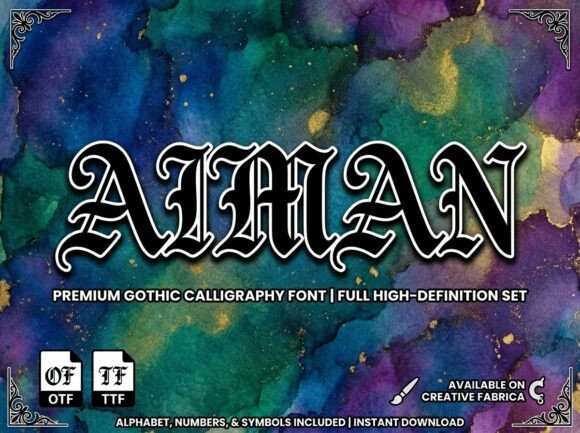
In the competitive landscape of visual communication, typography is rarely just about legibility; it is a primary vehicle for brand positioning and emotional resonance. Aiman represents a specific strategic choice for creators and businesses that need to convey authority, heritage, and intensity without sacrificing modern refinement. As a premium gothic calligraphy font, Aiman is engineered for high-impact visual storytelling, distinguishing itself through bold, high-contrast letterforms and sharp, chiseled terminals. For entrepreneurs, marketers, and designers, understanding the functional application of this typeface is essential to leveraging its majestic presence effectively.
The decision to utilize Aiman should be rooted in a clear understanding of your brand’s narrative goals. This typeface features intricate blackletter-inspired flourishes balanced against a massive visual weight. This structural duality creates a visual narrative of strength and historical prestige. However, such a distinct aesthetic requires intentional deployment. When used correctly, Aiman transforms generic headers into commanding statements. When used without context, it risks becoming decorative noise. The following analysis explores how to integrate Aiman into your visual strategy to support branding, customer experience, and long-term identity building.
Defining the Strategic Value of Gothic Calligraphy
To use Aiman effectively, one must first understand what it communicates to an audience. In typographic psychology, gothic and blackletter styles are historically associated with tradition, craftsmanship, and unyielding permanence. Aiman modernizes these associations by introducing elegant decorative plumes and precise geometric balance. This makes it exceptionally useful for brands that wish to signal "handcrafted power" rather than industrial uniformity.
For decision-makers in creative industries, Aiman serves as a shorthand for specific value propositions:
- Heritage and Authenticity: The intricate flourishes suggest a depth of history and attention to detail, valuable for artisanal brands or legacy publishers.
- Authority and Prestige: The heavy stroke weight commands attention, making it ideal for establishing dominance in a niche market.
- Atmospheric Depth: Unlike clean sans-serifs, Aiman carries texture and mood, supporting immersive experiences in entertainment and lifestyle sectors.
Strategically, this means Aiman is not a utility font. It is a signature element. Its value lies in its ability to do heavy lifting in the initial moments of user engagement, setting a tone that body copy and layout must then support.
Optimal Use Cases and Industry Applications
Aiman delivers exceptional results when aligned with specific industry verticals and content types. Its design characteristics make it particularly effective for audiences seeking intensity, exclusivity, or narrative immersion. Identifying whether your project falls within these optimal use cases is the first step in avoiding misalignment.
Dark Fantasy and Speculative Fiction Publishing
For publishers and independent authors, cover design is the primary conversion tool. Aiman is an exceptional choice for dark fantasy book titles because its chiseled terminals evoke the tactile feel of engraved stone or forged metal. This aligns perfectly with genre expectations while maintaining enough elegance to appeal to contemporary readers. When planning a series identity, using Aiman for main titles ensures instant recognition across volumes, creating a cohesive shelf presence that signals quality and consistency.
Heavy Metal and Alternative Music Branding
In music marketing, visual identity must match sonic intensity. Aiman’s bold structure supports heavy metal branding by providing a visual equivalent to distortion and power. However, its refined flourishes prevent the aesthetic from becoming illegible or amateurish. For band logos, album art, and tour posters, this typeface bridges the gap between raw aggression and professional production value. It allows artists to maintain edge while signaling that their output is premium and deliberate.
Edgy Streetwear and Fashion Logos
Streetwear relies heavily on semiotics and subcultural signaling. Aiman offers a departure from the ubiquitous minimalist sans-serifs that dominate fashion, allowing brands to claim a space rooted in neo-gothic revivalism. The font’s high contrast works well on textiles, ensuring readability even when embroidered or printed on dark fabrics. For fashion entrepreneurs, using Aiman in logo marks or limited-edition drop announcements can create a sense of exclusivity and counter-cultural prestige.
Atmospheric Cinematic and Event Headers
For film festivals, horror conventions, or immersive theater productions, typography sets the stage before the content begins. Aiman functions as an atmospheric cinematic header that primes the audience for a specific emotional experience. Its majestic presence suggests that the event is significant and curated. In digital marketing for these events, using Aiman in hero images and social media assets increases click-through rates by promising a high-quality, immersive experience.
Implementation Guidelines for Maximum Impact
Possessing a premium font does not guarantee a premium result. Execution determines efficacy. When integrating Aiman into your design system, adhere to the following practical guidelines to ensure the typeface enhances rather than detracts from your objectives.
Prioritize Hierarchy and Restraint
Aiman is visually loud. Its massive weight and intricate details demand space. A common strategic error is overusing display fonts, which dilutes their impact and fatigues the viewer. Limit Aiman to primary headlines, logos, and key call-to-action elements. Pair it with a clean, neutral sans-serif or a highly legible serif for body text. This contrast ensures that Aiman remains the focal point while maintaining overall readability and information architecture.
Respect Negative Space
The intricate blackletter-inspired flourishes of Aiman require breathing room. Crowding this typeface against other elements or placing it on busy backgrounds destroys its structural balance. When planning layouts, allocate generous margins and padding around Aiman text. This negative space acts as a frame, elevating the perceived value of the typography and reinforcing the sense of luxury and prestige.
Consider Medium and Scalability
Before finalizing any asset, test Aiman across all intended touchpoints. While it shines at large sizes, the sharp terminals and fine flourishes may lose definition at small scales or low resolutions. For mobile interfaces or small merchandise tags, verify that the letterforms remain distinct. If legibility suffers, reserve Aiman for larger formats and select a complementary secondary font for smaller applications. Strategic flexibility prevents accessibility issues and ensures consistent brand perception.
Align Color and Texture
Aiman’s chiseled terminals interact dynamically with color and texture. High-contrast pairings (e.g., white on black, gold on charcoal) amplify its dramatic nature. Conversely, low-contrast combinations can soften its intensity for more subtle applications. Consider how the font’s inherent texture relates to your background treatments. Placing Aiman over grainy, organic textures enhances its handcrafted quality, while placing it over smooth gradients emphasizes its modern precision. Choose based on whether your goal is traditional warmth or contemporary sharpness.
Risk Assessment and Strategic Pitfalls
Every strong design choice carries inherent risks. Understanding these allows for proactive mitigation. Using Aiman without clear goals or contextual awareness can lead to several strategic failures.
- Tonal Dissonance: Applying a gothic calligraphy font to corporate finance, pediatric healthcare, or tech startups often creates confusion. The historical weight of Aiman clashes with values of transparency, speed, or gentleness. Always validate that the font’s connotations align with your core brand attributes.
- Legibility Barriers: Blackletter styles inherently sacrifice some readability for style. If your primary goal is rapid information transmission (e.g., instructional signage, data-heavy dashboards), Aiman is likely the wrong tool. Reserve it for moments where emotion and impression take precedence over utility.
- Dated Aesthetics: Gothic typography cycles through trends. Relying solely on Aiman for trend-chasing rather than genuine brand alignment risks making your identity feel temporary. Ground its use in authentic narrative needs to ensure longevity beyond current fashion cycles.
- Visual Overwhelm: Combining Aiman with other ornate elements (borders, illustrations, textures) can create visual chaos. Adopt a "one hero" rule per composition. If Aiman is the hero, simplify surrounding elements. Balance is non-negotiable for maintaining professional polish.
Making Intentional Typographic Decisions
Ultimately, selecting Aiman should be a calculated business decision, not merely an aesthetic preference. Before licensing or deploying this typeface, conduct a brief audit of your current visual identity. Ask whether your existing typography adequately conveys the strength and prestige your brand requires. Evaluate if your target audience responds positively to historical and atmospheric cues. Test Aiman in mockups alongside your current assets to gauge its actual impact on hierarchy and mood.
When integrated with intention, Aiman becomes more than a font; it becomes a strategic asset that reinforces your market position. It communicates unyielding, traditional beauty and handcrafted power in ways that standard typefaces cannot. By respecting its constraints, pairing it thoughtfully, and applying it only where its unique voice adds tangible value, you transform typography from decoration into a driver of brand equity and audience connection. The majestic presence of Aiman is a tool for those willing to wield it with discipline and vision.