Breeze Font: Evaluating Fit for High-Impact Display Typography
When selecting typography for branding, packaging, or editorial headers, the distinction between a versatile workhorse and a specialized display face is critical. Breeze occupies a specific niche within the decorative display category, positioning itself as a high-impact visual anchor rather than a utility typeface. Designed with unique artistic elements and a strong visual personality, this font serves creators seeking to break away from standard geometric or humanist sans-serifs. However, its specialized nature requires careful evaluation against project requirements. Understanding the functional boundaries of Breeze, particularly its uppercase-only constraint and stylistic weight, is essential for determining whether it aligns with your design objectives or if an alternative approach is necessary.
Defining the Visual Character and Technical Scope
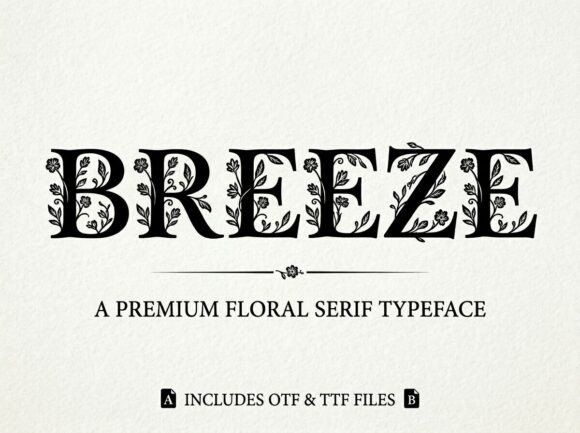
Breeze is engineered to be the center of attention. Unlike neutral typefaces designed to recede into the background and facilitate long-form reading, this font demands foreground placement. Its construction features distinct artistic flourishes that give each glyph a sense of individuality while maintaining a cohesive system. This balance allows it to function effectively in bold headlines, artistic logos, and creative packaging where the typography itself acts as a primary graphical element.
A defining technical characteristic that influences layout strategy is its case sensitivity. Breeze is an all-caps uppercase-only display typeface. It does not include lowercase letters. This limitation is intentional, designed specifically for high-impact applications where every letter functions as a standalone piece of art. For designers accustomed to mixed-case hierarchy, this necessitates a shift in composition. Without lowercase counters to create visual rhythm, spacing and scale become the primary tools for establishing flow. This makes Breeze exceptionally strong for short, punchy messaging but structurally unsuitable for subheads, body copy, or any interface requiring sentence-case legibility.
File Formats and Professional Compatibility
Evaluating a font resource also involves assessing technical deliverables. Breeze includes both OTF (OpenType) and TTF (TrueType) files, covering the spectrum of professional and consumer design environments.
- OTF (OpenType Font): This is the professional standard for advanced design and layout software such as Adobe Illustrator, InDesign, and Affinity Designer. OpenType format supports advanced typographic features and typically offers better rendering precision for print and high-resolution digital outputs.
- TTF (TrueType Font): Serving as the standard file for universal compatibility, TTF ensures that Breeze can be installed and utilized across various operating systems and older software versions without rendering issues. This is particularly relevant for teams working in mixed Windows/macOS environments or using non-Adobe tools like Canva or Microsoft Office for internal mockups.
Comparative Analysis: Breeze Versus Standard Display Alternatives
To make an informed decision, it is helpful to compare Breeze against other common typographic solutions used in similar contexts. While many decorative fonts exist, they vary significantly in execution and application.
Versus Minimalist Sans-Serif Displays
Minimalist display sans-serifs are often the default choice for modern branding due to their safety and scalability. They offer excellent legibility at smaller sizes and adapt easily to responsive web layouts. Breeze diverges from this path by prioritizing texture and personality over neutrality. Where a minimalist sans communicates efficiency and corporate stability, Breeze communicates artistry and bespoke craftsmanship. If the project goal is to convey institutional trust or maximize information density, a minimalist option is superior. However, if the objective is to evoke emotion, suggest luxury, or create a memorable visual signature in a crowded market, Breeze provides a distinct advantage that neutral typefaces cannot achieve.
Versus Hand-Lettering and Script Fonts
Decorative scripts and hand-lettered styles also occupy the "artistic" category, but they often sacrifice structure for fluidity. Scripts can be difficult to read at small sizes and may clash with other graphic elements due to their irregular baselines. Breeze maintains a structured, upright posture despite its decorative nature. This structural integrity makes it more versatile for packaging and logo lockups where alignment with other design elements is crucial. It offers the warmth of hand-drawn aesthetics with the grid-friendly reliability of a constructed typeface, making it a pragmatic middle ground between rigid geometry and organic chaos.
Versus Vintage and Retro Revivals
Retro revivals are popular for adding instant nostalgia, but they can sometimes date a design or feel derivative. Breeze incorporates artistic elements without being tethered to a specific historical era. This timeless quality allows it to integrate into contemporary designs without signaling a specific decade. For brands that want character without the baggage of pastiche, Breeze offers a fresher alternative to trend-dependent revival fonts.
Strategic Tradeoffs and Decision Factors
No typeface is universally optimal. Choosing Breeze involves accepting specific tradeoffs in exchange for its visual strengths. Recognizing these limitations upfront prevents friction during the design process.
The Uppercase Constraint as a Design Filter
The absence of lowercase letters is the most significant operational constraint. In practical terms, this eliminates Breeze from consideration for websites requiring extensive navigation labels, app interfaces, or documents with hierarchical text structures. It forces the designer to commit fully to a display-only role. If your project requires a single font family to handle everything from H1 tags to footer disclaimers, Breeze is not the solution. It must be paired with a complementary typeface that handles utilitarian tasks. This pairing requirement adds a layer of complexity to the selection process but ensures that Breeze is never misused in low-legibility scenarios.
Visual Weight and Negative Space
Due to its artistic density, Breeze carries significant visual weight. In tight layouts or confined packaging dimensions, it can easily overwhelm adjacent elements. Successful implementation requires generous negative space to let the letterforms breathe. Designers working within strict size constraints or dense information architectures may find the font too dominant. Conversely, in expansive layouts like billboards, hero banners, or premium product boxes, this weight becomes an asset, anchoring the composition and guiding the viewer’s eye immediately to the core message.
Brand Voice Alignment
Typography carries implicit meaning. Breeze projects confidence, creativity, and polish. It is less effective for brands aiming to appear humble, accessible, or strictly utilitarian. Before licensing, evaluate whether the font’s personality aligns with the brand’s long-term identity. A playful children’s brand might find it too sophisticated; a tech startup focused on data transparency might find it too ornamental. The font is best suited for lifestyle brands, artisanal products, fashion labels, and creative agencies where aesthetic expression is part of the value proposition.
Identifying Ideal Use Cases
Based on its characteristics and constraints, Breeze demonstrates optimal performance in specific scenarios. These applications leverage its strengths while respecting its limitations.
- Primary Logo Marks: The unique artistic elements provide built-in distinctiveness, reducing the need for additional iconography. The all-caps structure creates a solid, balanced footprint ideal for horizontal or stacked logo lockups.
- Premium Packaging: On shelf displays, the font’s strong visual personality cuts through visual noise. Its polished finish maintains professionalism even when scaled large, avoiding the amateurish quality that some decorative fonts exhibit at high resolutions.
- Editorial Headlines and Covers: For magazines, books, or digital publications, Breeze serves as an effective hook. Its decorative nature encourages readers to pause, while its structured form ensures the title remains legible.
- Social Media Graphics and Quotes: Short-form content benefits from immediate visual impact. The uppercase-only design simplifies layout decisions for square or vertical formats, ensuring consistency across campaigns.
- Event Branding and Signage: From wedding invitations to conference backdrops, the font strikes a balance between celebratory and formal. It elevates temporary graphics to feel like permanent brand assets.
Making the Final Evaluation
Selecting Breeze should be a deliberate choice based on project parameters rather than aesthetic preference alone. It excels when the brief calls for a centerpiece typeface that conveys artistry and authority without sacrificing professional polish. Its inclusion of both OTF and TTF formats ensures technical flexibility across workflows, removing compatibility barriers.
However, the decision must account for the uppercase-only limitation and the need for complementary pairing. If your project demands versatility across multiple text tiers or requires a softer, more approachable tone, exploring alternatives may be more prudent. But for creators specifically targeting high-impact moments where typography must perform as both communication and decoration, Breeze offers a refined, purpose-built solution. By understanding its distinct position relative to minimalist, script, and retro alternatives, designers can deploy it effectively to create work that is both visually striking and strategically sound.