Chime: Integrating Faceted Precision into Modern Visual Identity
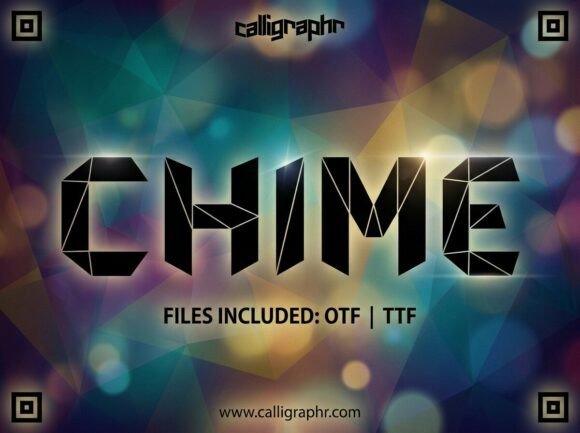
When a brand needs to communicate both technological sophistication and tangible luxury, standard geometric sans-serifs often fall flat. They lack texture. Chime solves this specific visual problem by operating as a technical display typeface that captures a faceted-and-futuristic soul. Unlike traditional fonts that rely on smooth curves or uniform strokes, Chime features massive, geometric letterforms uniquely characterized by a rhythmic low-poly internal structure. These sharp, triangular segments bridge the gap between digital gemstone cutting and modern architectural branding, creating a typographic voice that feels engineered rather than merely drawn.
For designers and brand strategists, understanding Chime requires looking past its aesthetic novelty and examining its functional utility. It is not a text face for body copy; it is a strategic tool for high-impact moments. Its heavy structural weight and crystalline personality make it the premier choice for specific niches where precision matters as much as style. By leveraging this typeface, creators can signal innovation and craftsmanship simultaneously, provided they apply it with intention and restraint.
Elevating Independent Jewelry Identities Beyond Tradition
The jewelry industry has long relied on high-contrast serifs or delicate scripts to convey elegance. However, independent designers targeting a younger, design-literate demographic often find these traditions stifling. Chime offers a radical alternative that aligns with contemporary manufacturing techniques like 3D printing and CAD modeling. The font’s low-poly internal structure mirrors the actual geometry of digitally rendered gems and metal settings.
Consider a boutique jeweler specializing in lab-grown diamonds or recycled metals. Using Chime for their wordmark or packaging immediately communicates a departure from heritage mining and antique aesthetics. The sharp, triangular segments of the letterforms echo the facets of a brilliant-cut stone, creating a subconscious link between the typography and the product. This is particularly effective for social media headers and unboxing experiences where the logo must hold its own against macro photography of intricate metalwork. The typeface does not just label the brand; it visually reinforces the precision engineering behind the craft.
Practical Application in Retail Signage
In physical retail environments, Chime performs exceptionally well when treated as an architectural element rather than mere signage. Because of its massive scale and structural weight, it reads clearly from a distance even when rendered in metallic finishes or backlit acrylic. Designers should consider using the font for storefront fascias or interior wayfinding where the angularity complements minimalist shelving and glass displays. The key is to let the negative space breathe; crowding these dense letterforms diminishes their crystalline impact.
Defining Boutique Tech and Startup Branding
Tech startups face a saturation crisis in visual identity. The ubiquitous rounded sans-serif has become shorthand for "friendly software," but it fails to distinguish companies working in deep tech, hardware, cybersecurity, or blockchain. Chime provides a necessary counter-narrative. Its faceted construction suggests complexity, security, and advanced computation without resorting to clichéd matrix-style effects or glitch art.
For a boutique tech firm, Chime works best as a primary logotype or a secondary display face for feature highlights on landing pages. The rhythmic low-poly structure resonates with audiences familiar with data visualization, mesh networks, and cryptographic hashing. It transforms abstract technical concepts into a solid, trustworthy visual form. When used in pitch decks or investor presentations, the font’s heavy weight commands attention and projects stability, distinguishing the startup from competitors using lighter, more ephemeral typography.
- Hardware Interfaces: Use Chime for device labeling or boot screens where legibility at small sizes meets industrial aesthetic requirements.
- SaaS Dashboards: Apply sparingly for major metric callouts or empty states to add character to otherwise sterile data environments.
- Developer Documentation: Utilize in section headers to break up dense technical text and reinforce brand identity throughout the user journey.
Capturing Energy in Electronic Music and Event Culture
High-end electronic music festivals and underground club nights require visual identities that match the sonic intensity of the event. Chime’s crystalline personality translates auditory precision into visual form. The sharp edges and geometric rigidity pair naturally with genres like techno, IDM, bass music, and experimental synthesis. Unlike organic or hand-drawn typefaces that suggest jam sessions or analog warmth, Chime signals programmed perfection and digital mastery.
Poster designers benefit from the font’s ability to remain legible while being heavily manipulated. The low-poly internal structure allows for creative treatments such as gradient meshes, chrome reflections, and 3D extrusion without losing the fundamental letterform. On social media, where static posters compete with video content, Chime’s high contrast and distinctive silhouette stop the scroll. It functions as a visual bass drop—immediate, heavy, and impossible to ignore.
Digital Headers and Social Media Impact
For digital-first campaigns, Chime excels in high-impact headers and detailed social media graphics. The font’s inherent texture reduces the need for additional background elements. A simple composition featuring Chime set against a dark, matte background often outperforms complex illustrations because the typeface itself carries the decorative load. This efficiency is crucial for teams producing high volumes of content who need to maintain a premium look without extensive rendering times. The triangular segments catch light and shadow in mockups, making flat designs appear dimensional and expensive.
Navigating Constraints and Implementation Strategy
Despite its versatility within specific niches, Chime demands respect for its limitations. It is strictly a display typeface. Attempting to use it for paragraphs, captions, or UI labels will result in poor readability and visual fatigue. The very features that make it stunning at large sizes—the internal faceting and sharp angles—become noise at small sizes. Successful implementation always involves pairing Chime with a highly legible, neutral sans-serif or monospace font for supporting text.
Hierarchy is another critical consideration. Because Chime carries so much visual weight, it should typically occupy the top tier of the typographic hierarchy. Using it alongside other decorative or condensed typefaces creates competition and clutter. Instead, treat Chime as the protagonist of the layout. Let it dominate the hero section, the album cover, or the business card front, then step back completely for the details.
Color selection also interacts uniquely with this typeface. High-contrast combinations (white on black, neon on dark grey) emphasize the faceted structure and enhance the futuristic vibe. Low-contrast or pastel palettes tend to soften the edges, potentially undermining the font’s core strength. If the goal is to highlight the digital gemstone quality, lighting and color choices must support the illusion of depth and reflection.
Making the Right Choice for Your Project
Choosing Chime is ultimately a decision about brand positioning. It is ideal for entities that want to be perceived as precise, forward-looking, and structurally sound. It is less suitable for brands emphasizing softness, tradition, approachability, or organic naturalism. Before licensing, test the specific characters needed for your project. While the geometric consistency is a strength, ensure the available alternates and ligatures accommodate your specific naming conventions or taglines.
Ultimately, Chime serves as a bridge between the digital and the physical. It acknowledges that modern luxury and technology are no longer separate spheres but intertwined disciplines. Whether defining the identity of a master jeweler, a quantum computing startup, or an avant-garde music collective, this typeface provides a vocabulary of precision that speaks directly to an audience that values both form and function. By understanding its specific strengths and respecting its boundaries, designers can harness Chime to create work that resonates with clarity and purpose.