Drip Tags: Integrating Authentic Graffiti Aesthetics into Professional Design Workflows
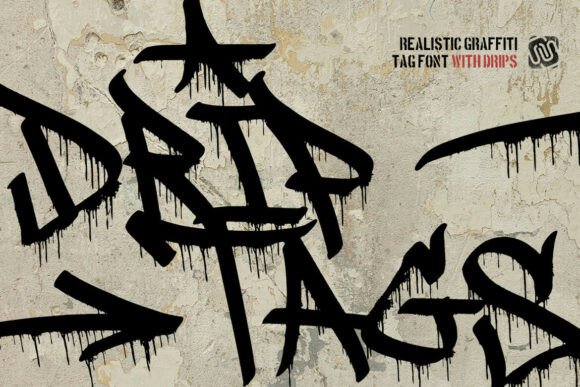
Achieving genuine street art aesthetics in digital design often requires a complex layering of textures, brushes, and post-processing effects. For designers, marketers, and content creators aiming to capture the raw energy of urban environments without spending hours on manual illustration, Drip Tags offers a streamlined solution. This typeface is not merely a decorative overlay; it is a functional tool built from real graffiti bombing experience. By integrating natural marker bleed and drip effects directly into the vector letterforms, Drip Tags allows professionals to implement authentic street style with the same efficiency as using a standard sans-serif font.
In professional creative workflows, time management and asset reliability are paramount. Drip Tags fits into the production pipeline by eliminating the need for external texture packs or rasterized overlays. Whether you are designing event posters, branding for streetwear labels, social media graphics, or editorial layouts, this font serves as a primary typographic element that carries its own visual weight. Understanding how to leverage its specific construction ensures that the final output feels organic rather than manufactured, maintaining the integrity of the graffiti aesthetic while meeting commercial design standards.
The Role of Authentic Typography in Creative Planning
Before initiating a project that requires an urban or rebellious tone, selecting the right typographic foundation is a critical planning step. Many "graffiti" fonts fail in professional settings because they lack rhythm or legibility. Drip Tags distinguishes itself through its origin; it is derived from actual tagging practice rather than digital imitation. When planning a layout, consider this font as a textural anchor. Because the drips are baked into the glyphs, the typeface dictates the vertical rhythm and negative space requirements of your composition.
During the conceptual phase, test Drip Tags against your project’s readability requirements. The integrated drip effects create a distinct silhouette that commands attention, making it ideal for headlines, logos, and short-form messaging. However, like any highly stylized display typeface, it functions best when balanced with cleaner, more neutral supporting elements. In your mood boards and initial sketches, treat Drip Tags as the primary voice of the design. Its imperfections are intentional, providing a human touch that contrasts effectively with the rigid grids often used in modern web and print design.
Technical Implementation and PUA Encoding
Efficiency in execution relies on understanding the technical capabilities of the asset. Drip Tags utilizes Private Use Area (PUA) encoding, a crucial feature for workflow speed. PUA encoding allows access to stylistic alternates, ligatures, and extra graphical elements without requiring specialized design software like Adobe Illustrator or Photoshop. This means that users working in Canva, Cricut Design Space, Silhouette Studio, or even basic word processors can access the full range of the font’s expressive features.
To utilize these features effectively during the production phase:
- Access Glyph Panels: Use your operating system’s character map or font book to copy and paste specific alternate characters directly into your canvas.
- Leverage Alternates for Variety: Avoid repetitive drip patterns by cycling through available alternates. This mimics the natural variation found in real street tags where no two marks are identical.
- Software Compatibility: Verify that your target platform supports PUA characters before beginning detailed layout work to prevent missing glyph errors during export.
This technical accessibility ensures that the font remains versatile across different stages of production, from rapid prototyping in browser-based tools to high-resolution vector refinement in professional suites.
Mastering Composition and Letterform Interaction
The practical application of Drip Tags requires a nuanced approach to typesetting. The uppercase letters are specifically engineered to serve as leading or ending characters within a word. This design choice reflects the physics of marker pens, where pressure and ink flow vary at the start and stop of a stroke. Using uppercase letters in the middle of a word can disrupt the visual flow and create unbalanced negative space. Instead, use them to frame the lowercase forms, adding emphasis and attitude where it naturally belongs.
If a specific arrangement feels too aggressive or visually heavy, adjust your placement strategy. Graffiti is inherently personal and adaptive; your digital application should mirror this flexibility. Experiment with alternating case structures or isolating specific words to create focal points. The goal is to maintain the "uncontrolled beauty" of the style while ensuring the viewer can parse the message quickly. In marketing materials, this balance is essential—the aesthetic must attract attention, but the communication must remain clear.
Kerning, Spacing, and Visual Rhythm
While Drip Tags comes with pre-adjusted kerning and spacing to facilitate immediate use, graffiti is rarely uniform. Professionals should view the default spacing as a starting point rather than a rule. Fine-tuning the tracking and kerning is often necessary to fit unique compositions and visual rhythms. Tighter spacing can increase intensity and cohesion, simulating a quick, confident tag, while looser spacing can evoke a larger-scale piece or a more relaxed vibe.
When adjusting spacing, pay close attention to how the integrated drips interact with adjacent characters. Unlike standard fonts where whitespace is predictable, the organic nature of Drip Tags means that drips may extend into the bounding box of neighboring letters. Manual optical adjustment is superior to metric tracking in this context. Trust your eye over automated metrics. If two drips collide awkwardly, swap in a PUA alternate or adjust the baseline shift slightly to create a natural overlap. This level of micro-refinement separates professional typography from amateur application.
Integration with Broader Design Ecosystems
Drip Tags does not exist in a vacuum; it interacts with other assets, textures, and platforms within your workflow. When pairing this font with photography or video, consider the contrast between the sharp, vector edges of the type and the grain of the background media. The font’s bold, organic style works exceptionally well over concrete textures, brick walls, or industrial surfaces, reinforcing the street art narrative. Conversely, placing it against solid, vibrant color fields creates a pop-art effect that suits modern advertising and merchandise design.
For entrepreneurs and small business owners producing physical goods, Drip Tags scales effectively across mediums. Because the drips are vector-based, they retain crispness whether printed on a business card or a large-format banner. This scalability reduces the need for multiple asset versions. When preparing files for print, ensure that the intricate drip details are not lost due to ink spread or low resolution. Consult with your printer regarding minimum line weights if scaling the font down significantly, although the typeface is generally robust enough for most standard commercial printing applications.
Quality Control and Consistency
Maintaining brand consistency while using a variable, hand-style font presents a unique challenge. Establish guidelines for how Drip Tags is used across your projects. Decide on standard capitalization rules, acceptable spacing ranges, and preferred color treatments. Documenting these decisions ensures that multiple designers or freelancers can apply the font consistently, preserving brand identity even when the typeface itself is designed to look spontaneous.
Regular quality checks should include verifying that PUA characters have not reverted to default glyphs during file transfers or format conversions. When sharing source files with clients or collaborators, always package the font file or outline the text to preserve the intended appearance. Outlining is particularly recommended for final deliverables involving Drip Tags, as it locks in the custom spacing and alternate characters, preventing formatting issues on systems that do not have the font installed.
Long-Term Usability and Workflow Efficiency
Investing in high-quality, specialized typefaces like Drip Tags pays dividends over time by reducing reliance on disposable graphic elements. Instead of searching for "drip pngs" or "grunge vectors" for every new campaign, you have a reusable, editable typographic system. This shifts the workflow from asset hunting to creative composition. The ability to type out custom phrases with authentic styling accelerates iteration cycles, allowing for faster client approvals and more agile content production.
Furthermore, the authenticity embedded in Drip Tags future-proofs your designs against trends that rely on superficial filters. Because the style is rooted in genuine lettering structure rather than temporary visual effects, it retains relevance even as design fashions shift. For educators and content creators teaching design or art history, the font also serves as a practical case study in translating analog subcultures into digital tools, bridging the gap between street heritage and contemporary graphic design practice.
Ultimately, successful integration of Drip Tags depends on respecting its origins while applying professional discipline. By understanding its structural logic, leveraging its technical features, and refining its application through thoughtful spacing and composition, users can harness the raw power of street graffiti within a controlled, efficient, and commercially viable workflow. The result is design that feels alive and imperfect, yet perfectly suited to the demands of modern visual communication.