Fika: A Character-Rich Serif for Expressive Branding
Typography often acts as the silent ambassador of a brand, communicating tone and intent before a single word is processed. For designers and business owners seeking a typeface that balances warmth with structural elegance, Fika offers a distinct solution. This character-rich decorative display serif moves beyond standard typographic conventions to provide a voice that is both sculpted and inviting. Designed specifically for expressive branding and editorial work, Fika avoids the coldness sometimes associated with high-contrast serifs, instead offering soft flared terminals and refined strokes that feel intentional rather than purely ornamental.
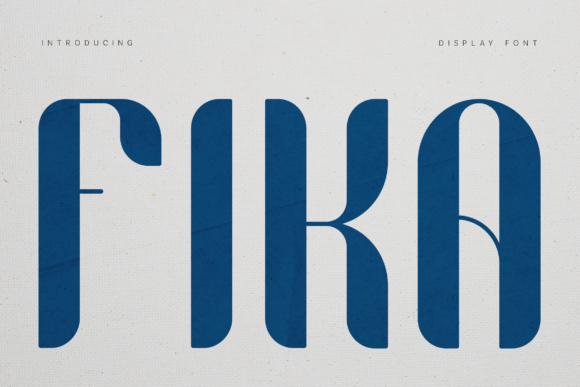
The visual architecture of Fika is defined by its unique rhythm. Letters like the ‘F’ and ‘K’ feature high-contrast structures that create a dynamic flow across the page or screen. This isn't merely an aesthetic choice; it serves a functional purpose in modern typography. In an era where digital feeds scroll rapidly, a font must possess enough personality to arrest attention without causing visual fatigue. Fika achieves this through its sculpted vertical strokes, which ground the design, while the softer details add a layer of approachability. It is a premium font that understands the difference between being loud and being memorable.
Defining Visual Personality Through Sculpted Forms
When evaluating creative fonts for boutique identities or lifestyle brands, the challenge often lies in finding a balance between avant-garde expression and commercial viability. Fika sits comfortably in this intersection. Its personality is derived from a careful modulation of stroke weight. Unlike traditional script fonts that mimic handwriting, or rigid sans serif fonts that prioritize neutrality, Fika operates as a hybrid. It carries the heritage of classic serif typefaces but reinterprets them for contemporary contexts.
The soft flared terminals are particularly significant for brand perception. Sharp edges can sometimes read as aggressive or overly formal, whereas Fika’s softened ends introduce a tactile quality. This makes the typeface exceptionally well-suited for beauty and fragrance branding, where the goal is to evoke sensory experiences. The refined contrast ensures that even at smaller display sizes, the letterforms retain their integrity. For entrepreneurs and marketers, this means the logo design remains legible on a business card just as effectively as it does on a large-format poster. The font delivers presence without demanding that the viewer squint or struggle to decode the message.
Strategic Applications Across Media and Print
Versatility is a key metric for any commercial font investment. Fika excels in environments where storytelling is paramount. Editorial designers will find its rhythmic visual flow ideal for magazine covers and feature headlines, where the typography needs to complement photography rather than compete with it. The high-contrast architecture provides ample negative space within the letters, allowing background textures or colors to breathe through the type itself.
In the realm of packaging design, Fika transforms product labels into tactile experiences. Whether applied to artisanal coffee bags, luxury skincare boxes, or wine bottles, the font suggests craftsmanship and attention to detail. For social media graphics and web design, the typeface performs best when used sparingly as a focal point. Because it is a display font, it should anchor the composition—perhaps as a main headline or a pull quote—while supporting body text handles the heavy lifting of information delivery. This strategic use reinforces visual hierarchy, guiding the audience’s eye naturally through the content.
- Boutique Cafés and Lifestyle Brands: Evokes warmth, community, and artisanal quality.
- Fashion Campaigns: Provides an editorial edge that pairs well with high-contrast photography.
- Luxury Identity Systems: Signals exclusivity through refined, sculpted details.
- Event Stationery: Adds a touch of modern romance without relying on traditional scripts.
Enhancing Readability and Brand Recognition
A common misconception about decorative serifs is that they sacrifice readability for style. While Fika is undoubtedly stylized, its construction prioritizes legibility in display settings. The open counters and distinct character shapes prevent letters from blurring together, a frequent issue with lower-quality creative fonts. However, users must be mindful of context. Fika is not designed for long-form body copy. Attempting to set paragraphs in this typeface will hinder reading speed and comprehension. Instead, leverage it for titles, navigation elements, and short statements where impact matters more than sustained reading comfort.
Brand recognition relies heavily on consistency. Using a distinctive typeface like Fika helps create a proprietary visual language. When customers repeatedly encounter these specific letterforms across your website, packaging, and advertising, the font becomes synonymous with your brand values. This is particularly effective for global brands, thanks to Fika’s extended multilingual support. Maintaining typographic consistency across different languages prevents brand dilution in international markets. The font allows you to maintain a cohesive identity system whether you are launching in Stockholm, Tokyo, or New York.
Practical Guidance on Pairing and Implementation
To maximize the effectiveness of Fika, thoughtful font pairing is essential. Because Fika has such strong character, it requires a supportive partner that recedes visually. A clean, geometric sans serif font often works best for body text, providing a neutral canvas that lets Fika shine. Alternatively, a simple monospaced font can create an interesting juxtaposition between organic elegance and technical precision. Avoid pairing Fika with other highly decorative or script fonts, as this creates visual noise and confuses the hierarchy.
For designers working in software like Adobe Illustrator, Photoshop, or Canva, Fika’s PUA encoding is a significant practical advantage. This feature allows effortless access to all glyphs, swashes, and alternate characters without needing specialized OpenType-savvy software. You can manually select specific stylistic alternates to customize logotypes or add flourishes to headlines. This level of control enables crafters and hobbyists to achieve professional-grade customization. Before finalizing any project, always test the font at various sizes and on different backgrounds. What looks elegant on a high-resolution monitor may need adjustment when printed on textured paper or viewed on a mobile device.
- Evaluate Project Tone: Ensure the warmth and elegance of Fika align with your brand voice before licensing.
- Test Hierarchy: Mock up real content to verify that the display size remains legible in context.
- Explore Alternates: Use the PUA-encoded glyphs to create unique lockups for logos and headers.
- Check Licensing: Verify that your commercial license covers all intended uses, including web embedding and merchandise.
Ultimately, Fika serves as more than just a collection of vectors; it is a centerpiece for design projects that require emotional resonance. By combining sculptural beauty with functional clarity, it empowers creators to build identities that feel both established and refreshingly new. Whether you are designing a luxury hotel identity or a personal blog header, treating typography as a primary design asset rather than an afterthought will elevate the entire project. Fika provides the necessary tools to make that elevation possible, turning standard text into a compelling visual narrative.