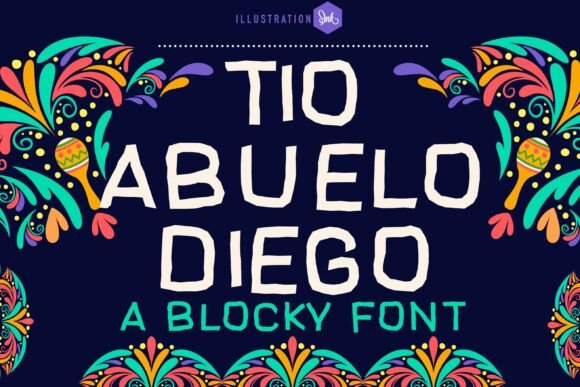
Tio Abuelo Diego: Strategic Typography for Authentic Cultural Branding
In an era where digital perfection often equates to sterility, establishing a brand identity that feels genuinely human requires deliberate typographic choices. Tio Abuelo Diego serves as a strategic tool for designers and business owners seeking to bridge the gap between heritage aesthetics and modern commercial viability. This hand-cut display typeface is not merely a decorative element; it is a visual signal of tradition, craftsmanship, and familial warmth. Its heavy, blocky letterforms with rhythmic, chiseled edges communicate a specific narrative of artisanal integrity that standard geometric sans-serifs cannot replicate.
For entrepreneurs and marketers, selecting Tio Abuelo Diego is a decision rooted in positioning. It signals to the audience that the brand values organic processes over industrial uniformity. However, leveraging this typeface effectively requires more than aesthetic appreciation. It demands a clear understanding of how its irregular structural weight influences readability, brand perception, and customer experience across various touchpoints. When applied with intention, Tio Abuelo Diego transforms generic marketing materials into culturally resonant assets that foster trust and community connection.
Defining the Visual Voice of Tradition
To use Tio Abuelo Diego strategically, one must first understand its anatomical distinctiveness. Unlike digitally generated fonts that prioritize mathematical consistency, this typeface mimics the physical resistance of wood carving. The irregularities in stroke width and the chiseled terminals are features, not flaws. They provide a tactile quality that translates visually, suggesting that a human hand was involved in the creation process.
This "folk-art soul" is particularly valuable for brands operating in saturated markets where authenticity is the primary differentiator. For independent family-run restaurants or boutique craft producers, the font acts as a shorthand for legacy. It tells a story of multi-generational knowledge and local roots before the customer reads a single word of copy. Strategically, this reduces the cognitive load required to establish brand character. The typography does the heavy lifting of emotional priming, allowing other brand elements to focus on functional communication.
Core Characteristics Driving Brand Perception
- Rhythmic Irregularity: The variation in letterform structure prevents visual fatigue and creates a sense of movement, distinguishing the brand from static corporate identities.
- Heavy Blocky Weight: Provides high impact and authority, making it suitable for headlines and signage where presence is required without aggression.
- Chiseled Edges: Evokes materiality and craft, reinforcing associations with handmade goods, traditional cooking, and artisanal manufacturing.
- Organic Flow: Despite its heaviness, the typeface maintains a natural cadence that feels approachable rather than imposing.
Strategic Applications Across Business Touchpoints
The versatility of Tio Abuelo Diego lies in its ability to anchor diverse applications while maintaining a cohesive cultural thread. However, its utility is context-dependent. Decision-makers should evaluate specific use cases based on the desired emotional outcome and functional requirements.
Hospitality and Culinary Identity
For restaurateurs, the menu and signage are critical conversion points. Tio Abuelo Diego excels here because it aligns visual form with culinary substance. A taqueria, bakery, or farm-to-table establishment using this typeface reinforces the promise of scratch-made quality. Strategically, use it for section headers, dish names, or exterior signage to create immediate atmospheric alignment. Avoid using it for dense descriptive text or pricing tables, where legibility at small sizes is paramount. The goal is to evoke appetite and nostalgia, not to serve as a utilitarian information vessel.
Artisanal Product Packaging and Labeling
In retail environments, packaging must compete for attention on crowded shelves. Tio Abuelo Diego’s sturdy personality allows it to hold its own against glossy, mass-produced competitors. For craft breweries, ceramicists, or textile makers, the font suggests a premium, small-batch origin. When planning label layouts, treat the typeface as a graphic element. Its unique silhouette can become as recognizable as a logo mark itself. Ensure sufficient negative space surrounds the letterforms to preserve their chiseled details; crowding diminishes the handcrafted effect and reduces shelf impact.
Community Engagement and Event Marketing
Cultural festivals, farmers' markets, and community gatherings rely on posters and social media headers to generate excitement. Standard event typography often feels bureaucratic or overly festive. Tio Abuelo Diego offers a middle ground: celebratory yet grounded. It communicates that an event is rooted in local culture rather than corporate sponsorship. For social media headers, the font’s horizontal rhythm works well within platform constraints, providing a warm backdrop for event details. Use it to headline key information (dates, locations) while pairing it with a clean sans-serif for logistical fine print.
Operational Considerations and Implementation Planning
Adopting a display typeface with strong character requires operational discipline. Without clear guidelines, Tio Abuelo Diego can easily overwhelm a brand system or be misapplied in ways that undermine its value. Successful implementation depends on thoughtful pairing and strict hierarchy management.
Establishing Typographic Hierarchy
Tio Abuelo Diego is a specialist, not a generalist. It should occupy the top tier of your typographic hierarchy exclusively. Plan your brand system with a supporting cast of neutral, highly legible typefaces for body copy, navigation, and legal text. The contrast between the expressive warmth of Tio Abuelo Diego and the functional clarity of a secondary font creates dynamic tension that guides the viewer’s eye. This duality mirrors the balance many heritage brands strive for: honoring tradition while operating efficiently in a modern context.
Technical Legibility and Accessibility
While the irregular edges contribute to the font's charm, they also present accessibility challenges. Before finalizing any design asset, test Tio Abuelo Diego across intended mediums. What looks rustic on a large poster may become illegible on a mobile screen or embroidered merchandise. Establish minimum size thresholds in your brand guidelines. If the chiseled details begin to fill in or blur at smaller scales, the typeface has exceeded its functional limit. Prioritizing readability ensures that the pursuit of aesthetic warmth does not exclude users with visual impairments or those viewing content in suboptimal conditions.
Consistency vs. Novelty
There is a risk of overusing distinctive typography simply because it is available. Resist the urge to apply Tio Abuelo Diego to every touchpoint. Its power comes from scarcity and strategic placement. Overexposure dilutes its cultural resonance and can make a brand appear costumey rather than authentic. Audit existing materials before adoption. Identify the three to five moments where emotional connection is most critical, and reserve the typeface for those instances. Everywhere else, let your supporting typography and photography carry the brand voice.
Evaluating Risks and Long-Term Brand Health
Every typographic choice carries inherent risks. Understanding these potential pitfalls allows for proactive mitigation and ensures long-term brand health. Tio Abuelo Diego is no exception, despite its versatile appeal.
Avoiding Cultural Appropriation and Pastiche
The most significant risk when using a typeface with such specific cultural coding is inauthenticity. If a brand lacks genuine connection to the traditions Tio Abuelo Diego evokes, its use can feel performative or appropriative. Conduct an honest internal audit before adoption. Does your product, service, or story genuinely align with the folk-art aesthetic? If the answer is ambiguous, consider whether a more neutral typeface might better serve your positioning. Authenticity cannot be retrofitted through typography alone; the font must amplify an existing truth, not fabricate one.
Balancing Trend Awareness with Timelessness
Hand-cut and rustic typefaces experience cycles of popularity. While Tio Abuelo Diego draws from enduring folk traditions, its current relevance intersects with contemporary design trends. To future-proof your investment, focus on the typeface’s structural qualities rather than its trendiness. Build your brand system around principles of warmth and craftsmanship that transcend temporary aesthetic movements. This approach ensures that even if rustic display fonts fall out of fashion, your brand’s core identity remains intact because it was built on substance, not style.
Scalability Across Digital and Physical Environments
Modern brands exist simultaneously online and offline. A typeface that performs beautifully on wooden signage may struggle in responsive web environments or app interfaces. Test Tio Abuelo Diego rigorously in digital contexts before committing. Develop fallback strategies for situations where the font cannot render optimally. Perhaps your website uses it only for hero sections while relying on web-safe alternatives for interactive elements. This pragmatic approach preserves the brand’s visual integrity without sacrificing user experience or site performance.
Making the Final Decision
Selecting Tio Abuelo Diego is ultimately a strategic bet on the value of perceived authenticity. For businesses whose success depends on conveying warmth, tradition, and human touch, it offers unparalleled communicative efficiency. The font’s heavy, blocky forms and chiseled edges do more than display text; they embody values that would otherwise require extensive storytelling to convey.
However, this efficiency comes with responsibility. Effective use requires restraint, technical awareness, and cultural sensitivity. Approach Tio Abuelo Diego as a partnership rather than a decoration. Invest time in understanding its nuances, testing its limitations, and integrating it thoughtfully into your broader brand ecosystem. When deployed with this level of intentionality, it becomes more than a typeface—it becomes a foundational element of brand equity that resonates deeply with audiences seeking genuine connection in an increasingly artificial world.
The decision to adopt Tio Abuelo Diego should be documented in your brand strategy alongside rationale, usage guidelines, and success metrics. Treat typography as a business asset subject to the same evaluation criteria as any other operational investment. By doing so, you ensure that the warmth of tradition translates into tangible outcomes: stronger brand recognition, deeper customer loyalty, and more effective communication across every touchpoint where your audience encounters your story.