Naste: A Practical Guide to Retro Decorative Typography
In the evolving landscape of graphic design, the cyclical nature of visual trends often brings past aesthetics back into the spotlight with renewed vigor. Among the most enduring of these revivals is the bold, expressive style that defined much of the late 20th century. Naste emerges as a significant tool in this space, offering designers and business owners a bridge between nostalgic charm and contemporary functionality. As a bold decorative typeface with a playful retro personality, Naste is not merely a font; it is a stylistic statement inspired by the visual aesthetics of the 70s through the 90s. Understanding how to leverage its specific characteristics can transform a standard project into a memorable visual experience.
Defining the Visual Character of Naste
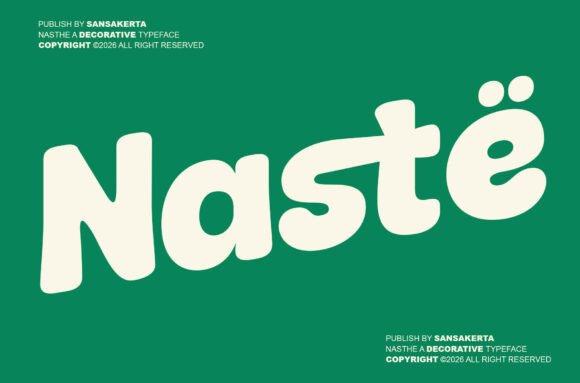
To effectively utilize any typeface, one must first understand its anatomical and emotional weight. Naste distinguishes itself through chunky shapes and soft rounded corners that eschew the rigid geometry of modern sans-serifs in favor of organic letterforms. This construction delivers a strong, eye-catching appearance that feels handcrafted rather than mechanically generated. The "groovy" quality mentioned in its description is not just marketing language; it refers to the fluid rhythm of the glyphs that mimic the sign-painting and psychedelic poster art of previous decades.
Unlike minimalist fonts that aim to disappear into the background, Naste demands attention. It possesses a high x-height and substantial stroke width, making it inherently loud. However, the softness of its terminals prevents it from feeling aggressive. This balance makes it particularly effective for brands seeking to communicate approachability alongside confidence. When evaluating this typeface for your own work, consider whether your project requires this level of visual volume. It is designed to stand out in large sizes, meaning it thrives as a display face but may struggle in environments requiring subtlety or extreme density.
Core Typographic Features and Technical Specifications
Beyond its aesthetic appeal, practical utility relies on technical completeness. A decorative font is only as good as its character set, and Naste addresses common pain points associated with vintage-style typography. Many retro revivals lack comprehensive language support or proper punctuation, rendering them unusable for professional international projects. Naste includes a full set of uppercase and lowercase letters, ensuring versatility in headline casing. Furthermore, it offers multilingual support covering full Latin simple languages, which expands its usability across European and American markets without requiring fallback fonts that might clash stylistically.
The inclusion of ligatures and stylistic alternates is perhaps the most critical feature for achieving an authentic look. In retro typography, the interaction between letters is as important as the letters themselves. Standard spacing can sometimes feel too sterile for a groovy aesthetic. By utilizing the included stylistic alternates and ligatures, designers can create custom wordmarks where characters flow into one another naturally. This mimics the connected, fluid nature of hand-lettered signage from the 70s and 80s. Additionally, the package provides numerals and punctuation that match the primary alphabet’s weight and curvature, maintaining visual consistency throughout headlines, pricing displays, and social media captions.
Strategic Applications Across Creative Mediums
The versatility of Naste allows it to function across a wide spectrum of creative applications. However, success depends on matching the font’s strengths to the appropriate medium. Below are key areas where this typeface excels and practical advice for implementation.
- Logo Design and Brand Identity: Because Naste features unique, organic letterforms, it serves as an excellent foundation for logotypes. Its chunky nature ensures legibility even when scaled down for business cards or app icons. When designing a logo, experiment with the stylistic alternates to create a proprietary lockup that cannot be easily replicated by simply typing the brand name.
- Packaging and Merchandise: Retail environments are competitive, and shelf presence is paramount. Naste’s bold decorative style cuts through visual clutter, making it ideal for product labels, shopping bags, and apparel branding. The retro association also triggers positive nostalgia, which can enhance perceived value for artisanal, food, beverage, and lifestyle products.
- Editorial and Poster Art: For event posters, album covers, or magazine headlines, Naste provides instant hierarchy. Its expressive style creates a fun, nostalgic, and impactful visual identity that guides the viewer’s eye immediately to the most important information. Pair it with a clean, neutral sans-serif for body copy to ensure readability while letting the headline shine.
- Social Media Graphics: Digital platforms favor high-contrast, easily digestible visuals. Naste performs exceptionally well in square or vertical formats where text must be readable on small mobile screens. Its distinct personality helps maintain brand recognition across disparate posts and stories.
Evaluating Suitability: Strengths and Considerations
While Naste is a powerful asset, it is not a universal solution. Adopting a people-first content approach means being honest about limitations. This typeface is strictly a display font. Attempting to use it for long-form body text, legal disclaimers, or user interface elements will result in poor readability and user fatigue. The chunky shapes and tight spacing that make it beautiful at 72pt become muddy and indistinct at 12pt.
Furthermore, consider the tone of your project. Naste carries a playful, retro personality. It is ill-suited for corporate financial reports, medical documentation, or luxury brands aiming for austere minimalism. Its strength lies in communication that is human, energetic, and culturally aware. Before purchasing or downloading, test the font in the actual context of your project. Mock up a headline or logo to see if the organic letterforms align with your brand voice. If your goal is sleek futurism or traditional elegance, Naste may introduce cognitive dissonance. However, if your objective is to evoke warmth, creativity, and vintage authenticity, it is likely an optimal choice.
File Formats and Implementation Best Practices
When you acquire Naste, you receive three distinct file formats: Naste.otf, Naste.ttf, and Naste.woff. Understanding the difference ensures smooth workflow integration.
- OTF (OpenType Format): This is generally the preferred format for desktop design software like Adobe Illustrator, InDesign, and Photoshop. OTF files support advanced typographic features such as ligatures and stylistic alternates more robustly than TrueType. Use this format for print production and static digital graphics.
- TTF (TrueType Format): While older, TTF remains widely compatible across various operating systems and non-Adobe software. It is a reliable backup format for general office use or legacy applications.
- WOFF (Web Open Font Format): Essential for web designers, this compressed format is optimized for website performance. Using the provided WOFF file ensures that your retro aesthetic translates to the browser without slowing down page load times or relying on system fonts that won't render correctly.
For those new to working with decorative typefaces, remember that whitespace is your ally. Because Naste is visually heavy, surrounding it with ample negative space prevents the design from feeling claustrophobic. This breathing room enhances the "soft rounded corners" and allows the organic shapes to be appreciated fully. Additionally, color selection plays a vital role. While the font works in monochrome, pairing it with warm, earthy tones or vibrant neons can amplify its era-specific inspiration.
Support and Community Engagement
Typography is a collaborative discipline, and access to the creator can be invaluable. The creators of Naste emphasize a supportive relationship with users, stating, "Wish you enjoy our font and if you have a question, don’t hesitate to drop message I’m happy to help." This openness is beneficial for professionals who may need clarification on licensing, glyph access, or pairing recommendations. Whether you are a seasoned art director or a small business owner creating your first merchandise line, leveraging this support can prevent technical hurdles and ensure your final output matches your vision.
Ultimately, Naste represents more than just a collection of vector shapes; it is a conduit for cultural expression. By understanding its historical roots, technical capabilities, and appropriate applications, creators can harness its bold decorative power to build identities that resonate deeply with modern audiences. Whether applied to a craft beer label, a music festival poster, or a boutique clothing tag, Naste offers a tangible connection to the past while remaining firmly rooted in present-day design standards. Its blend of playfulness and professionalism makes it a worthy addition to any typographic toolkit focused on impact and personality.