Evaluating Texas Simple: A Practical Guide to Vintage Outline Typography
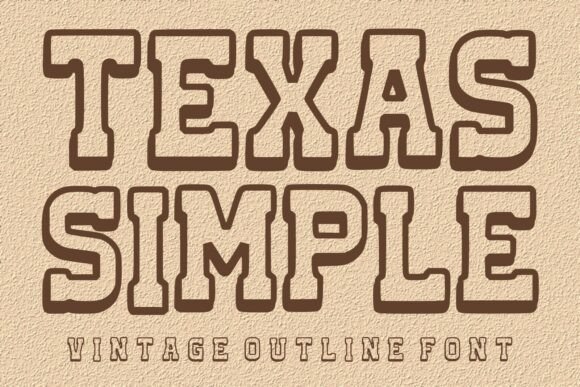
Selecting the right typeface for a project with western or retro influences requires balancing thematic accuracy with modern legibility. Designers often struggle to find fonts that evoke the rugged charm of classic signage without appearing overly distressed, illegible at small sizes, or cliché. Texas Simple addresses this specific niche as a clean, bold vintage outline font. It draws inspiration from mid-century western aesthetics and retro commercial signage but strips away excessive texture to maintain versatility. For professionals evaluating typography options for branding, packaging, or apparel, understanding where Texas Simple fits within the broader landscape of display fonts is essential for making an informed design decision.
Defining the Aesthetic: Clean Outlines vs. Distressed Textures
The primary distinction of Texas Simple lies in its refusal to rely on artificial aging. Many fonts in the western category achieve their look through heavy grunge textures, eroded edges, and irregular baselines. While these "worn" styles are effective for specific historical recreations, they often fail in functional applications like logos or product packaging where clarity is paramount. Texas Simple takes a different approach by utilizing strong, geometric outlined letterforms. The result is a typeface that feels nostalgic due to its structural proportions rather than surface-level effects.
This clean outline construction offers significant practical advantages over traditional distressed alternatives:
- Scalability: Because the lines are crisp vector paths rather than rasterized textures, the font remains sharp whether printed on a business card or a large-format banner.
- Customizability: The hollow nature of the letterforms allows designers to easily add custom fills, gradients, shadows, or background elements without complex masking work.
- Legibility: The bold stroke weight ensures the characters remain distinct even when viewed from a distance or reproduced in low-contrast environments.
- Modern Compatibility: The minimal aesthetic pairs more easily with contemporary sans-serif body copy than heavily textured display faces, which can create visual dissonance in mixed layouts.
When comparing Texas Simple to other outline fonts, it is important to note its specific regional influence. Unlike generic bubble letters or art deco outlines, the proportions here reference the utilitarian signage found in American trade and commerce during the early-to-mid 20th century. This makes it a specialized tool rather than a universal solution.
Comparative Analysis: When to Choose Texas Simple Over Alternatives
No single typeface serves every purpose. When researching options for a vintage-themed project, it is helpful to categorize available fonts based on their intended function. Texas Simple occupies a middle ground between decorative novelty and functional display typography. Understanding this positioning helps clarify when it is the superior choice and when another category may be more appropriate.
Texas Simple vs. Slab Serif Western Fonts
Slab serifs (often called "Egyptians") are the most recognizable western typeface style. They feature thick, blocky serifs and solid fills. These are excellent for conveying authority and tradition. However, slab serifs can feel heavy and visually dense, especially in all-caps headlines. Texas Simple provides a lighter visual weight through its outline structure while retaining western character. If your design needs to feel airy, open, or friendly while still referencing western themes, the outline style is often a better fit than a solid slab serif. Conversely, if the goal is to convey institutional stability or serious heritage, a traditional slab serif may carry more appropriate gravitas.
Texas Simple vs. Hand-Lettered Script Styles
Western design frequently employs hand-painted sign scripts with dramatic swashes and variable stroke widths. These fonts excel at creating a bespoke, artisanal feeling. However, they suffer from limited versatility; they are difficult to read in long strings of text and challenging to lock up in structured logo compositions. Texas Simple offers a more modular, grid-based alternative. It provides the vibe of hand-lettering through its stylistic choices but maintains the consistency of digital type. For projects requiring multiple variations of a logotype or consistent headline treatments across a brand system, the structured nature of Texas Simple reduces production time and ensures visual coherence.
Texas Simple vs. Modern Geometric Outlines
Contemporary geometric outline fonts often prioritize perfect circles and mathematical precision over historical reference. While clean, these can sometimes feel sterile or futuristic. Texas Simple distinguishes itself through subtle idiosyncrasies in its letterform construction that nod to physical manufacturing processes of the past. The curves may not be mathematically perfect, and the terminals reflect the tools used to paint physical signs. This human element prevents the font from looking like a default system graphic. If your project requires a retro feel that avoids looking like 1980s synth-wave or corporate futurism, this distinction matters significantly.
Optimal Use Cases and Application Scenarios
Based on its technical characteristics and aesthetic profile, Texas Simple performs best in specific contexts. Evaluating your project against these scenarios can help determine fit.
Brand Identity and Logotypes: The bold outline structure creates immediate recognition without overwhelming accompanying brand marks. The ability to manipulate the interior space of the letters allows for unique brand differentiation. This is particularly valuable for businesses in the craft beverage, outdoor recreation, and heritage goods sectors where western signaling is desired but must coexist with modern retail expectations.
Apparel and Merchandise Design: T-shirt graphics benefit enormously from outline typography. Solid blocks of ink can feel heavy on fabric and reduce breathability. Outlined type reduces ink coverage while maintaining visual impact. Texas Simple’s rugged yet clean aesthetic translates exceptionally well to screen printing, embroidery digitizing, and heat transfer vinyl, where fine details in distressed fonts might be lost or require excessive cleanup.
Packaging and Label Design: On crowded store shelves, hierarchy is critical. Texas Simple functions effectively as a secondary display face that supports a primary brand name without competing for attention. Its open counters and bold strokes remain legible at small label sizes, making it suitable for ingredient callouts, flavor names, or promotional badges on bottles, cans, and boxes.
Event Signage and Posters: For festivals, markets, and themed events, the font delivers instant atmospheric context. Because it lacks built-in distress, designers can choose whether to keep it pristine for a polished look or apply their own texture overlays to match specific environmental conditions. This flexibility makes it more reusable across different event iterations than pre-textured alternatives.
Limitations and Decision Factors
While versatile, Texas Simple is not universally applicable. Recognizing its constraints prevents costly misapplications.
Body Copy Unsuitability: As a display font with outlined forms, Texas Simple should never be used for extended reading. Paragraph text requires solid, optimized letterforms for comfortable scanning. Reserve this typeface for headlines, short phrases, labels, and decorative elements only. Pair it with a highly legible serif or sans-serif for supporting content.
Contextual Authenticity: If you are designing for a strict historical reenactment or museum exhibition requiring period-accurate typography, Texas Simple may be too refined. It is an interpretation of vintage style, not a faithful reproduction. Projects demanding archaeological typographic accuracy should seek out digitizations of original specimen books or custom lettering based on primary sources.
Licensing Verification: Before committing to Texas Simple for commercial work, always verify the specific license terms. Display fonts often have tiered licensing structures distinguishing between personal use, desktop publishing, web embedding, and merchandise production. Ensure your intended application falls within permitted uses, especially for client work involving product sales or large-scale distribution.
Visual Weight Management: Outline fonts inherently command attention. Using Texas Simple alongside other bold display elements can create visual competition. Effective layout requires treating this font as a focal point. If your design already contains complex illustrations or photographic imagery, consider whether adding another high-contrast typographic element enhances or clutters the composition. Sometimes negative space serves the western aesthetic better than additional ornamentation.
Making the Final Selection
Choosing Texas Simple ultimately depends on whether your project prioritizes clean versatility over raw authenticity. It represents a pragmatic compromise for designers who need western character without sacrificing professional polish. When testing the font in your actual layout, evaluate it at multiple sizes and in both positive and reverse color treatments. Check how it interacts with your chosen palette and supporting typefaces. Compare it directly against at least two alternatives—one more ornate and one more minimalist—to confirm it strikes the right balance for your specific audience and medium.
The strength of Texas Simple lies in its restraint. In a market saturated with exaggerated western stereotypes, its measured approach offers a sophisticated option for brands and creators seeking timeless appeal. By understanding both its capabilities and its boundaries, you can leverage this typeface effectively while avoiding common pitfalls associated with thematic display typography. Whether it becomes your go-to solution or serves as a benchmark for comparison, evaluating it through this practical lens ensures your typographic decisions support rather than undermine your broader design objectives.