Blode Starkly: Mastering the 90s Retro Psychedelic Aesthetic Without Overdoing It
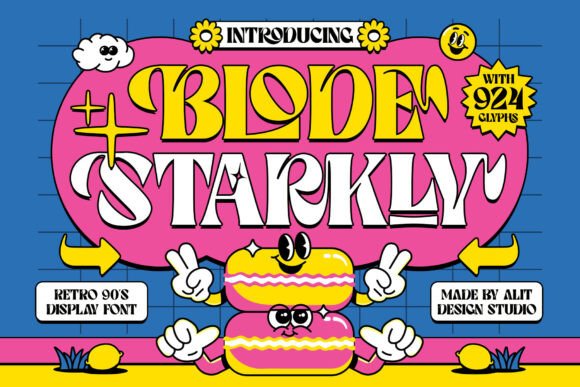
Blode Starkly is far more than a novelty typeface; it is a comprehensive design system that captures the vibrant, groovy energy of 90s psychedelic art and retro-futurism. For designers looking to tap into the trending Rubber Hose and Y2K aesthetics dominating platforms like Creative Market and Behance, this font offers an authentic voice. However, its massive personality and extensive feature set can easily overwhelm a layout if applied without strategy. Understanding how to leverage its 924 glyphs and seven stylistic sets is the difference between a professional brand identity and a cluttered, unreadable mess.
The Trap of Treating Display Fonts as Body Text
The most frequent mistake designers make with Blode Starkly is underestimating its visual weight. Because the letterforms are bold, curvy, and eccentric, they demand significant negative space. A common error is setting this typeface at small sizes or in dense paragraphs, which destroys legibility and negates the fun personality the font was designed to convey. When the intricate details of the psychedelic curves collapse at low resolutions or small point sizes, the result looks muddy rather than vintage.
To avoid this, treat Blode Starkly strictly as a display tool. It excels in headlines, logos, poster titles, and short social media captions where the unique proportions can breathe. If your project requires extensive reading text, pair this typeface with a clean, neutral sans-serif or a simple monospaced font. This contrast not only improves readability but also makes the retro elements of Blode Starkly pop by providing a modern, sophisticated anchor. Remember that in retro design, whitespace is just as important as the ink; let the eccentric shapes stand alone rather than forcing them into tight grids.
Ignoring the Power of Stylistic Sets
Many users download Blode Starkly and only utilize the default character map, missing out on the typeface’s true versatility. With seven distinct stylistic sets included, sticking to the base glyphs is a missed opportunity for customization. These sets range from elegant swashes and swirls to liquid-melt effects and starry sparkles, allowing you to shift the mood from playful kitsch to high-end streetwear branding instantly.
Failing to explore these alternates often leads to generic designs that look like every other retro revival project. Before finalizing any layout, open the OpenType panel in your design software and cycle through the stylistic sets. You might find that a liquid-melt alternate better suits a music festival poster, while a cleaner swash variant works better for a funky cafe menu. This level of customization ensures your typography feels bespoke rather than preset. Always check the specimen file provided by the foundry to see exactly what each set offers before assuming the default characters are your only option.
Navigating the Massive Glyph Count Efficiently
With 924 glyphs, Blode Starkly is a powerhouse, but this abundance can lead to decision paralysis or inefficient workflow. Beginners often waste time manually drawing custom lettering because they do not realize the specific ligature or ornament they need already exists within the font. Conversely, some designers overuse these special characters, creating compositions that are visually noisy and distracting from the core message.
The practical solution is to approach the glyph palette with intent. Use the extensive library to solve specific design problems rather than decorating for decoration's sake. For example, use the built-in ornaments to create borders or dividers instead of sourcing external vector assets, ensuring perfect stylistic consistency. However, limit the use of highly decorative alternates to focal points. If every letter in a headline uses a different stylistic set, the eye cannot find a resting place. Balance is key; use the standard bold forms for structure and reserve the wildest glyphs for emphasis or standalone logotypes.
Evaluating Licensing and Technical Compatibility
Before purchasing or downloading Blode Starkly, verify that the license covers your intended use case. A common oversight is using a desktop license for web projects or merchandise, which can lead to legal complications later. Additionally, ensure your software supports OpenType features. While most modern design tools handle stylistic sets seamlessly, older versions or basic word processors may not access the full 924-glyph library, rendering the font’s best features useless.
Test the font in your actual working environment before committing to a large project. Check how the eccentric proportions interact with your grid system and whether the file size impacts web performance if used digitally. For print projects, verify that the intricate curves output cleanly at your desired resolution. Taking these technical precautions prevents frustrating mid-project pivots and ensures the font performs as expected across all deliverables.
Balancing Retro Kitsch with Modern Sophistication
While Blode Starkly is rooted in nostalgia, successful application requires a contemporary sensibility. Relying too heavily on stereotypical 90s color palettes or textures can make a design feel dated or like a costume party. The font itself bridges the gap between vintage inspiration and modern execution, so your supporting design elements should do the same.
Instead of defaulting to neon greens and purples, consider pairing Blode Starkly with muted earth tones, minimalist photography, or sleek UI elements. This juxtaposition creates the "retro-futuristic" vibe that defines current trends. For entrepreneurs and marketers, this balance signals that a brand is culturally aware yet professionally grounded. Whether designing packaging for a craft beverage or a digital campaign for a lifestyle brand, let the font provide the historical reference while the rest of the composition speaks to today’s audience.
Ultimately, Blode Starkly is a fantastic resource for creators who want to capture a specific cultural moment without sacrificing usability. By respecting its display nature, fully utilizing its stylistic sets, managing its glyph count with intention, and balancing its retro charm with modern design principles, you can create work that is both nostalgic and commercially viable. Avoid the pitfalls of overuse and technical neglect, and this typeface will serve as a reliable engine for expressive, high-impact typography.