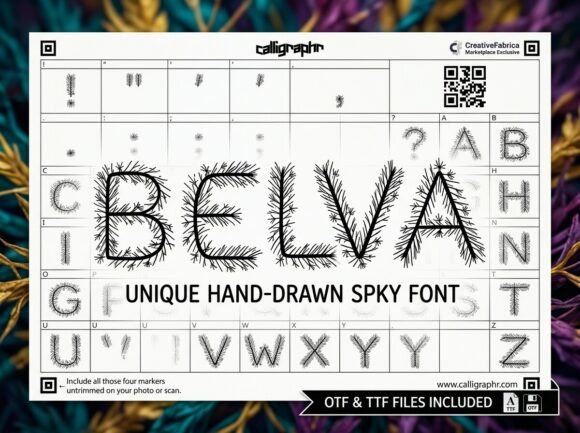
Belva: Organic Display Type for Rustic Branding
Typography often serves as the silent ambassador of a brand, but in the realm of organic and nature-inspired design, it needs to do more than just communicate words. It must evoke a sensory experience. Belva is a tactile display typeface that captures a wild-and-woodland soul, distinguishing itself from standard serif or sans-serif options by embedding the texture of the forest directly into its structure. Rather than relying on digital filters or post-production overlays to achieve a natural look, this font features classic letterforms uniquely constructed from rhythmic, hand-drawn pine needle clusters and evergreen sprigs. For designers and business owners seeking to bridge the gap between detailed botanical illustration and modern rustic branding, Belva offers a solution that feels both authentic and intentionally crafted.
The Anatomy of Botanical Typography
Most "nature" fonts fall into one of two traps: they are either too cartoonish for professional use or so intricate that they become illegible at smaller sizes. Belva navigates this challenge through its medium structural weight. The letterforms maintain a recognizable typographic skeleton, ensuring readability, while the stroke terminals and curves are replaced with organic matter. This construction method means the texture is not an afterthought; it is the foundation of the glyph.
The hand-drawn quality of the pine needle clusters introduces a necessary imperfection that digital perfection often lacks. In an era where AI-generated imagery and vector-smoothed logos dominate feeds, the tactile personality of Belva signals human involvement. It suggests that a person sat down with ink and paper to draw each sprig. This level of detail matters significantly when your audience values craftsmanship. When a viewer reads a headline set in Belva, they aren't just processing information; they are subconsciously registering the care put into the visual presentation. This makes it particularly effective for brands where trust, tradition, and natural origins are key selling points.
Strategic Applications in Niche Markets
While versatile, Belva shines brightest when applied to specific industries that benefit from alpine and authentic aesthetics. Understanding where this typeface performs best can save designers time during the selection process and ensure the final output resonates with the target demographic.
- Independent Winter Lodges and Hospitality: For boutique hotels, cabins, or retreat centers, the guest experience begins with the logo and website header. Belva communicates warmth and shelter without resorting to cliché imagery. It pairs exceptionally well with minimalist photography, allowing the typography to provide the textural contrast that clean architectural photos sometimes lack.
- Boutique Christmas Tree Farms: Seasonal businesses often struggle with branding that looks temporary or cheap. Using Belva elevates a tree farm’s identity from a roadside stand to a heritage destination. The evergreen motifs are literal, yet the sophisticated letterform construction keeps the brand feeling established and premium rather than kitschy.
- Handcrafted Apothecary and Skincare: Labels require a delicate balance of legibility and atmosphere. While Belva is a display face and shouldn't be used for ingredient lists, it is ideal for product names and brand logos on packaging. The botanical connection reinforces the natural ingredients inside the bottle, creating a cohesive narrative between the container and the contents.
- Alpine Lifestyle Content Creators: Social media headers and thumbnail text need to stop the scroll. High-impact alpine aesthetics perform well on platforms like Instagram and Pinterest. Belva provides enough visual density to stand out against busy outdoor photography while maintaining the organic vibe that followers of this niche expect.
Pairing and Hierarchy Considerations
Because Belva possesses such a distinct, textured personality, it demands a supportive partner. It is rarely successful when used in isolation for all textual elements. The complexity of the pine needle clusters creates significant visual noise, which is desirable in a headline but detrimental in body copy. To maintain usability and efficiency in communication, pair Belva with a clean, neutral sans-serif or a simple, high-x-height serif.
Consider the hierarchy of information. Belva should occupy the top tier: logos, primary headlines, pull quotes, and short call-to-action buttons. As soon as you move to subheads or paragraphs, transition to a complementary typeface. This contrast not only aids readability but also makes the Belva elements pop more effectively. If everything is textured, nothing is. By limiting its use to high-value real estate within the design, you preserve its impact and prevent viewer fatigue.
Technical Implementation and Readability
When implementing Belva across digital and print environments, technical considerations are just as important as aesthetic ones. The intricate details of the evergreen sprigs can be lost if the font is scaled too small or rendered poorly. On screens, ensure that the background color provides sufficient contrast. Dark green text on a black background, for example, will cause the fine needle details to disappear, reducing the letterforms to muddy blobs. Light backgrounds or high-contrast dark modes work best to preserve the integrity of the hand-drawn lines.
For print applications, such as apothecary labels or lodge signage, pay close attention to ink spread and paper stock. Uncoated papers tend to absorb ink, which can soften the sharp edges of the pine needles. While some softening adds to the rustic charm, excessive bleed can compromise legibility. Requesting a proof on the actual intended substrate is a practical step that prevents costly reprints. In digital spaces, test the font across various devices. What looks crisp on a retina display might lose definition on older mobile screens. Adjusting tracking (letter-spacing) slightly wider than default can help air out the clusters and improve recognition at smaller viewport widths.
Enhancing Brand Authenticity Through Type
Ultimately, selecting Belva is a strategic decision about brand positioning. It moves beyond decoration and functions as a communication tool that conveys values before a single word is read. For entrepreneurs and marketers targeting an audience aged 20–50 who prioritize sustainability, local production, and outdoor lifestyles, generic typography can feel disconnected. These consumers are adept at spotting inauthenticity. A sleek, corporate sans-serif might signal efficiency, but it fails to signal "wild-and-woodland."
Belva aligns the visual language with the operational ethos of organic businesses. It supports storytelling by acting as a visual metaphor for growth, resilience, and natural beauty. Whether used for a seasonal campaign or a permanent rebrand, it offers a way to differentiate in a crowded market. However, its effectiveness relies on restraint and context. Used thoughtfully, it transforms standard messaging into an immersive brand moment. Used carelessly, it becomes merely decorative. The key lies in respecting the typeface’s origins and allowing its tactile nature to enhance, rather than overwhelm, the core message. By treating Belva as a specialized instrument rather than a universal tool, creatives can unlock its full potential to connect with audiences on a deeper, more sensory level.