Skinny Horizon: Evaluating a Dashed Display Typeface for Brand Identity
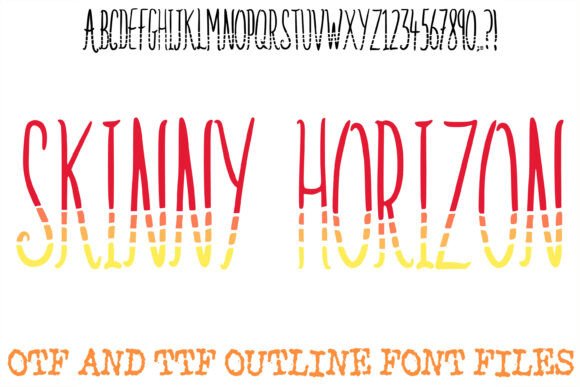
Selecting the right typeface is a critical decision in visual communication, particularly when establishing a brand identity that relies on texture and mood. Skinny Horizon presents a distinct option for designers seeking to merge typographic structure with textile-inspired aesthetics. As an elegant, tall display typeface, it features slender letterforms uniquely bisected by a rhythmic, dashed pattern. This specific design choice creates a visual horizon line across the center of each character, distinguishing it from standard condensed sans-serifs or traditional scripts. For professionals evaluating this font for textile branding, modern stationery, creative journal headers, or minimalist social media graphics, understanding its functional capabilities and aesthetic limitations is essential for making an informed selection.
Defining the Aesthetic and Structural Characteristics
Skinny Horizon is categorized as a display typeface, meaning it is engineered primarily for headlines, titles, and short-form text rather than extended reading. Its primary defining feature is the horizontal bisection of the letterforms. Unlike decorative fonts that add external flourishes, Skinny Horizon integrates its ornamentation directly into the stroke structure. The elongated vertical stems provide a sense of height and sophistication, while the tactile, stitch-like details introduce a handcrafted energy. This combination results in a high-contrast aesthetic that feels simultaneously airy, due to the slender weight, and grounded, due to the deliberate interruption of the stroke.
The "horizon" effect serves a dual purpose. Visually, it creates a consistent horizontal rhythm that can help align text with other linear elements in a layout. Thematically, it evokes associations with sewing, weaving, and horizons, making it semantically appropriate for specific industries. When evaluating this typeface, it is important to recognize that these characteristics are intrinsic to the font file; they are not effects applied post-production. This ensures consistency across different media but also means the designer cannot adjust the density or placement of the dashed pattern without modifying the vector data directly.
Strategic Applications and Ideal Use Cases
The utility of Skinny Horizon is highly context-dependent. It excels in environments where the boundary between graphic design and material culture is blurred. Designers should consider this typeface a strong fit for the following scenarios:
- Textile and Fashion Branding: The stitch-like bisection acts as a visual metaphor for fabric construction. For boutique clothing lines, embroidery shops, or sustainable fashion labels, the font reinforces the product’s tangible nature before the customer even touches the material.
- Modern Stationery and Invitations: For gallery openings, art exhibitions, or wedding invitations, the typeface offers a sophisticated alternative to calligraphy. It provides elegance without the historical baggage of traditional scripts, fitting well within contemporary minimalist layouts.
- Creative Journaling and Editorial Headers: In print or digital publishing focused on arts, crafts, or mindfulness, Skinny Horizon functions effectively as a section divider or chapter title. The horizontal line created by the dashes can serve as a natural resting point for the eye.
- Minimalist Social Media Graphics: On platforms like Instagram or Pinterest, where vertical space is valuable, the tall aspect ratio allows for impactful headlines that occupy less horizontal width. The unique texture remains legible at medium sizes, helping posts stand out in crowded feeds.
Evaluating Tradeoffs and Technical Considerations
While Skinny Horizon offers a unique visual signature, it introduces specific tradeoffs that must be weighed during the selection process. The very features that make it distinctive also impose constraints on usability.
Legibility and Scale
The dashed bisection reduces the overall ink density of each character. While this contributes to the "airy" feel, it significantly impacts legibility at small sizes. If the font is scaled down below a certain threshold, the gaps in the stroke may disappear on low-resolution screens or bleed together in print, causing the letters to look broken or muddy. Designers must test Skinny Horizon at the actual intended output size. It is generally unsuitable for body copy, captions, or any interface element requiring rapid scanning. It demands whitespace and scale to function correctly.
Tonal Specificity
This typeface carries a strong personality. It reads as delicate, feminine, and artisanal. If a brand aims for a corporate, industrial, or overtly technological tone, Skinny Horizon may create cognitive dissonance. The handcrafted energy is difficult to neutralize through color or layout alone. Evaluators should ensure the font’s inherent mood aligns with the long-term brand strategy, as it is not a versatile workhorse that can adapt to vastly different messaging pillars.
Pairing Requirements
Because Skinny Horizon is so textured, it requires careful pairing. Combining it with other decorative or serif typefaces often leads to visual clutter. It typically performs best when anchored by a clean, geometric sans-serif or a simple monospaced font that provides stability without competing for attention. The selection of supporting typography will dictate whether the overall design feels cohesive or chaotic.
Comparative Analysis: When to Choose Alternatives
Decision-making involves comparing Skinny Horizon against other options in the display category. Understanding when not to use this font is as important as knowing when to use it.
If the project requires high legibility at small sizes, such as packaging ingredients lists or website navigation, a standard condensed sans-serif is a superior choice. Fonts like Oswald or Bebas Neue offer similar vertical proportions without the legibility risks associated with interrupted strokes. They provide the structural benefits of a tall display face while maintaining universal readability.
If the goal is to evoke craftsmanship but with a more organic, irregular feel, a hand-lettered script or a rough-texture brush font might be more appropriate. Skinny Horizon is precise and rhythmic; it suggests machine stitching or digital interpretation of craft rather than raw, handmade imperfection. For brands emphasizing "wabi-sabi" or extreme rustic authenticity, the regularity of the dashed pattern may feel too manufactured.
Conversely, if the project demands luxury but lacks a connection to textiles or horizons, a high-contrast Didone serif (such as Bodoni or Playfair Display) may convey sophistication more universally. These typefaces share the elegant vertical stress of Skinny Horizon but rely on stroke modulation rather than graphical interruption, making them safer choices for general luxury markets like finance, real estate, or high-end dining.
Practical Decision-Making Framework
To determine if Skinny Horizon aligns with current project goals, designers and stakeholders should apply the following evaluation criteria:
- Assess the Medium: Will the primary application be large-format print or high-resolution displays? If the primary touchpoint is mobile web or low-res newsprint, the risk of rendering issues likely outweighs the aesthetic benefit.
- Verify Semantic Alignment: Does the concept of a "horizon," "stitch," or "line" support the brand narrative? If the connection is purely decorative rather than conceptual, the novelty may wear off quickly.
- Test Hierarchy Integration: Mock up the font alongside the intended body copy and secondary headers. Does Skinny Horizon dominate the hierarchy appropriately, or does it distract from the core message?
- Evaluate Longevity: Highly stylized display fonts can date a design faster than neutral typefaces. Consider whether this specific aesthetic supports a timeless brand identity or if it is intended for a seasonal campaign or temporary activation.
Skinny Horizon occupies a niche intersection of typography and texture. It is a specialized tool designed to solve specific aesthetic problems related to elegance, verticality, and tactile association. By objectively evaluating its legibility constraints, tonal implications, and comparative advantages, designers can determine whether it serves as the foundational element of a visual identity or if an alternative solution better meets the practical demands of the project. Successful implementation relies not just on appreciating its beauty, but on respecting its functional boundaries within a comprehensive design system.