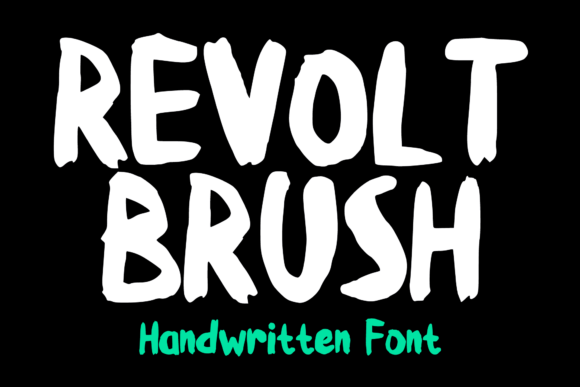
Revolt Brush: Harnessing Edgy Typography Without Sacrificing Readability
Inject a dose of rebellious attitude into your designs with Revolt Brush, but do so with intention. Imbued with the undeniably edgy aesthetic of punk, grunge, and rock n’ roll, this brush-display font commands notice. However, commanding notice is only half the battle; maintaining communication is the other. Expertly crafted, Revolt Brush is perfect for compelling movie and music posters, dynamic single covers, and captivating t-shirt designs. It is also the go-to choice for stickers, clothing, and merchandise that possess an unapologetically daring style. Feel the rush of its distinctive cool energy and let Revolt Brush enthral your designing journey, provided you navigate its unique characteristics with professional discipline.
Understanding the Role of Display Typography
Before applying this typeface to your next project, it is vital to understand what Revolt Brush actually is. It is not a workhorse text font designed for long-form reading or corporate reports. It is a specialized display tool meant to evoke raw emotion and counter-culture aesthetics. A common misunderstanding among newer designers is treating high-impact brush fonts as universal solutions. When used outside its intended scope, the result often looks chaotic rather than creative.
This font thrives in environments where brevity and impact are paramount. Think band logos, event flyers, streetwear branding, and social media headers. If you are designing a brochure with dense informational paragraphs, Revolt Brush will hinder usability. Recognizing these boundaries early prevents wasted hours trying to force an expressive display face into a functional layout role. Respect the font’s personality, and it will elevate your work; ignore it, and your design may suffer from visual noise that obscures your message.
Avoiding Legibility Pitfalls in Grunge Design
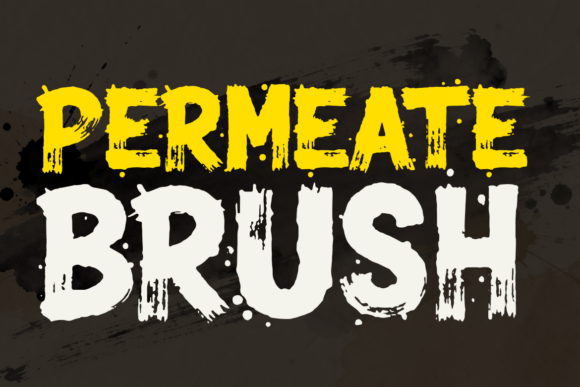
The most frequent mistake when working with distressed or brush-style typography is sacrificing legibility for texture. Revolt Brush features organic strokes and rough edges that define its character. While these details look fantastic at large sizes, they can become muddy when scaled down or placed against busy backgrounds. Many creators overlook the importance of negative space, leading to letters that bleed into one another or disappear entirely into complex imagery.
To avoid this, always test your design at the smallest size it will be viewed. If you are designing a concert poster, ensure the venue name and date remain crisp even when the poster is viewed as a thumbnail on a phone screen. Increase tracking (letter spacing) slightly if the brush strokes feel too tight. Unlike clean sans-serif fonts, brush fonts often require more breathing room to maintain their distinct shapes. Furthermore, be mindful of contrast. Placing dark, textured lettering over a dark, textured photo is a recipe for failure. Use solid color blocks behind the text or apply subtle drop shadows to separate the type from the background without compromising the gritty aesthetic.
Practical Checks Before Finalizing Your Layout
- Scale Testing: Print a proof or view the file at 25% zoom to verify that fine details in the brush strokes do not vanish.
- Background Contrast: Ensure a minimum contrast ratio exists between the ink and the canvas, especially for merchandise where fabric texture adds another layer of complexity.
- Kerning Adjustments: Manually adjust spacing between specific letter pairs. Auto-kerning rarely works perfectly with hand-drawn style fonts due to their irregular widths.
- Hierarchy Assessment: Confirm that Revolt Brush is reserved strictly for headlines or short phrases. Pair it with a clean, neutral sans-serif for supporting information.
Technical Considerations for Merchandise and Print
When using Revolt Brush for physical products like t-shirts, stickers, or packaging, digital previews can be deceptive. Screen resolution often smooths out jagged edges that become problematic during printing. A common error is assuming the on-screen rendering matches the output. In screen printing, extremely thin distressed lines may not hold ink properly, resulting in broken text. In embroidery, the intricate brush details might be impossible to stitch, turning your edgy logo into an unrecognizable blob.
Always consult with your printer or manufacturer before finalizing files. You may need to simplify the vector paths or increase the stroke weight specifically for production. For digital applications, ensure you have the correct webfont files if using Revolt Brush online. Large display fonts can slow down page load times if not optimized. Serving a heavy font file for a minor headline hurts user experience and SEO performance. Subset the font to include only the characters you actually use, or limit its application to static images where appropriate.
Licensing and Ethical Usage
Another critical aspect often overlooked is licensing. Just because a font fits your rebellious theme does not mean it is free for all uses. Misunderstanding license tiers can lead to legal issues or unexpected costs later. Some licenses cover personal projects but restrict commercial merchandise or web embedding. Others may cap the number of impressions or units sold.
Read the End User License Agreement (EULA) thoroughly before purchasing or downloading. If you are a freelancer creating work for a client, clarify who holds the license. Transferring font files to a client without the proper commercial license transfer is a violation of intellectual property rights. Budgeting for the correct license upfront is far cheaper than retrofitting a campaign because of compliance issues. Supporting type designers through proper licensing also ensures they continue creating the high-quality tools we rely on.
Pairing Strategies for Balanced Composition
Revolt Brush carries significant visual weight. To prevent your design from feeling overwhelming, pairing strategy is essential. A frequent misstep is combining it with other decorative or script fonts. This creates competition rather than harmony. The goal is to let the brush font scream while the supporting elements whisper.
Opt for geometric sans-serifs or monospaced typefaces to ground the composition. These structured forms provide a stable foundation that highlights the organic chaos of Revolt Brush without fighting it. For example, use Revolt Brush for the main title of a music festival poster, but utilize a bold Helvetica or Roboto Mono for the lineup and ticket details. This contrast enhances readability and reinforces the hierarchy. Remember that whitespace is also a pairing element. Allowing ample margins around your brush typography gives it room to breathe and increases its perceived value.
Making an Informed Decision
Ultimately, choosing Revolt Brush should be a deliberate design decision, not just a stylistic impulse. Evaluate whether your project truly benefits from a punk or grunge aesthetic. Does the tone match the brand voice? Will the target audience respond positively to this level of aggression, or would a cleaner approach communicate better? Sometimes, the most rebellious act a designer can take is exercising restraint.
If you determine that this typeface is the right fit, commit to executing it well. Pay attention to spacing, contrast, technical specifications, and licensing. By avoiding common pitfalls and approaching the font with professional respect, you transform it from a mere novelty into a powerful communication asset. Let the distinctive cool energy of Revolt Brush serve your vision, ensuring that your final product is as effective as it is expressive.