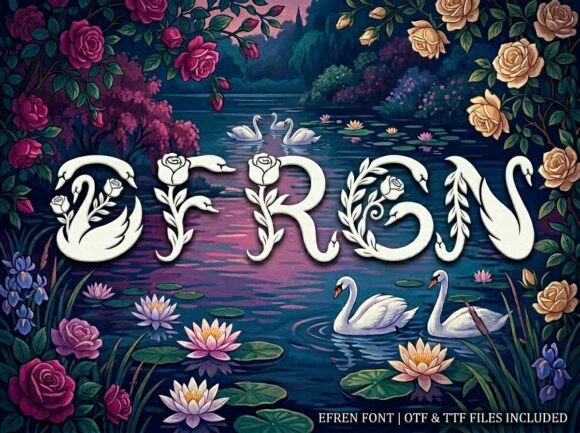
Efren: A Practical Guide to Using This All-Caps Display Font Effectively
Efren is a stunning decorative display font designed specifically to be the center of attention in any visual composition. Featuring unique artistic elements and a strong visual personality, this typeface serves creators who want to break away from ordinary typography without sacrificing professional polish. Whether you are designing bold headlines, artistic logos, or creative packaging, Efren offers a distinct aesthetic that commands immediate viewer engagement. However, because it possesses such a specific character, it requires a thoughtful approach to application. Understanding its technical constraints and design intent is essential for achieving high-quality results rather than frustrating layout issues.
Understanding the Uppercase-Only Constraint
The most critical detail to understand before integrating Efren into your workflow is that it is an all-caps uppercase-only display typeface. It does not include lowercase letters. This is not a missing feature or a download error; it is a deliberate design choice intended for high-impact headlines, logos, and decorative initials where every letter functions as a standalone work of art. Many designers, particularly those new to decorative typography, overlook this specification and attempt to use the font for body copy or subheadings requiring mixed case.
When you try to force an uppercase-only font into a paragraph setting, the result is often visually exhausting and difficult to read. Capital letters are generally wider and more uniform in height than lowercase letters, which creates a "blocky" texture that reduces reading speed and comprehension. To avoid this common pitfall, reserve Efren strictly for short bursts of text. Use it for titles, brand names, or pull quotes where legibility at smaller sizes is not the primary concern. If your project requires extensive reading material, pair Efren with a clean, neutral sans-serif or serif typeface that includes a full set of lowercase characters to maintain hierarchy and readability.
Evaluating Technical Compatibility and File Formats
Another area where users frequently encounter friction is file format selection. When you acquire Efren, you receive both OTF (OpenType Font) and TTF (TrueType Font) files. While these formats are often used interchangeably by casual users, they serve different purposes in a professional environment. Choosing the wrong format can limit your access to advanced typographic features or cause rendering inconsistencies across different platforms.
- OTF (OpenType Font): This is the professional standard for advanced design and layout software like Adobe Illustrator, InDesign, and Affinity Designer. OpenType fonts support complex glyph substitutions, ligatures, and alternate characters that are often essential for getting the most out of a decorative font like Efren. If you are doing detailed logo work or custom lettering, always install and use the OTF version.
- TTF (TrueType Font): This is the standard file for universal compatibility across all devices, including older operating systems, basic office software, and web environments. While reliable, TTF files may not expose the same level of typographic nuance as their OpenType counterparts. Use this format when you need broad accessibility or are working in software that does not fully support OpenType features.
Installing both versions simultaneously can sometimes cause conflicts in font menus, leading to duplicate entries or unexpected fallback behavior. Best practice dictates installing only the format that aligns with your current software ecosystem and project requirements. For most creative professionals working on branding or editorial design, the OTF file will provide the superior experience.
Avoiding Visual Overcrowding in Layouts
Because Efren features unique artistic elements and a strong visual personality, it carries significant visual weight. A frequent mistake occurs when designers treat this decorative display font as if it were a standard geometric sans-serif. Placing Efren too close to other graphic elements, images, or competing typefaces can create a cluttered, chaotic appearance that undermines the font’s elegance. The intricate details within each glyph need breathing room to be appreciated.
To maintain a polished finish, apply generous negative space around text set in Efren. Think of each word as an image rather than mere text. When designing packaging or posters, ensure that the background color or texture provides sufficient contrast without introducing additional noise that fights with the letterforms. If you are using Efren for a logo, resist the urge to add drop shadows, outlines, or excessive effects. The font’s strength lies in its inherent structure; adding external embellishments often dilutes its impact rather than enhancing it. Let the typeface do the heavy lifting by keeping the surrounding design intentionally restrained.
Assessing Brand Alignment Before Purchase
While Efren is versatile enough for many applications, it is not universally appropriate. Decorative display fonts carry strong emotional associations, and what works beautifully for a boutique wine label might feel entirely wrong for a corporate financial report. Before committing to this typeface, evaluate whether its artistic personality aligns with your brand voice or project tone. Ask yourself if the audience expects refinement and creativity or clarity and neutrality.
Test the font in context before finalizing your decision. Type out actual headlines or brand names relevant to your project rather than relying on generic specimen sheets. View the results at the exact size and medium where they will appear. A font that looks striking at 72 points on a screen may lose its distinctive character when scaled down for business cards or mobile interfaces. By validating usability early, you prevent costly redesigns and ensure that your typographic investment delivers genuine value. Remember that Efren excels as a spotlight performer, not a supporting actor. Use it to elevate key messages, but build your broader typographic system with complementary tools that handle the functional demands of communication.